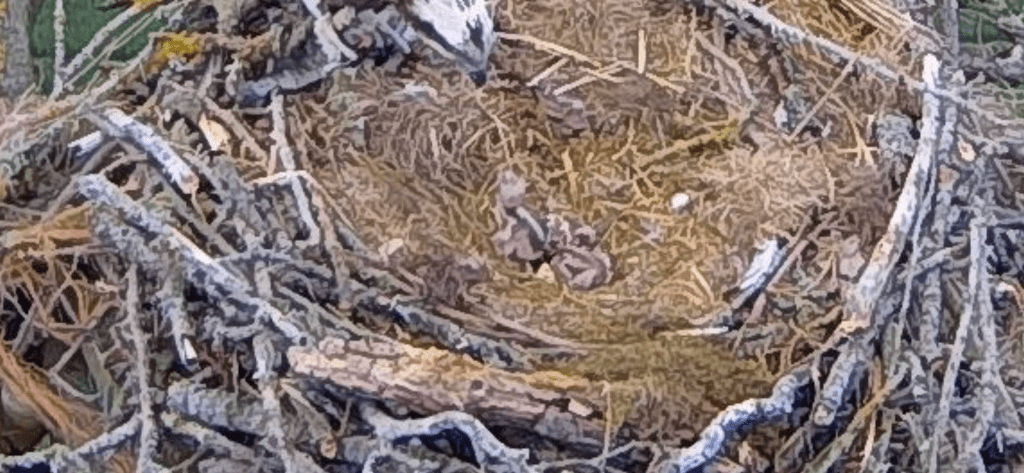
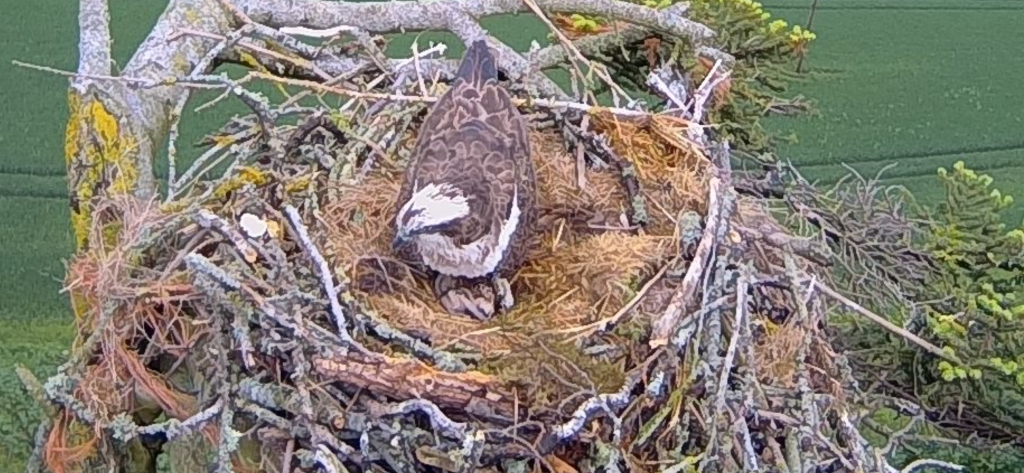
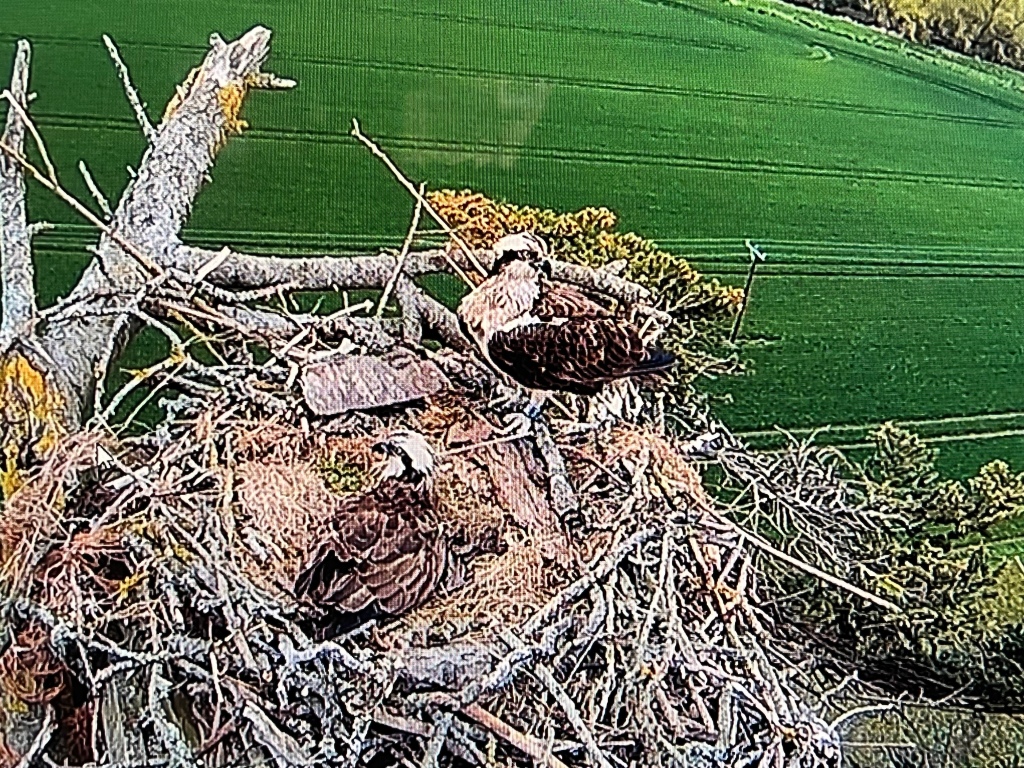
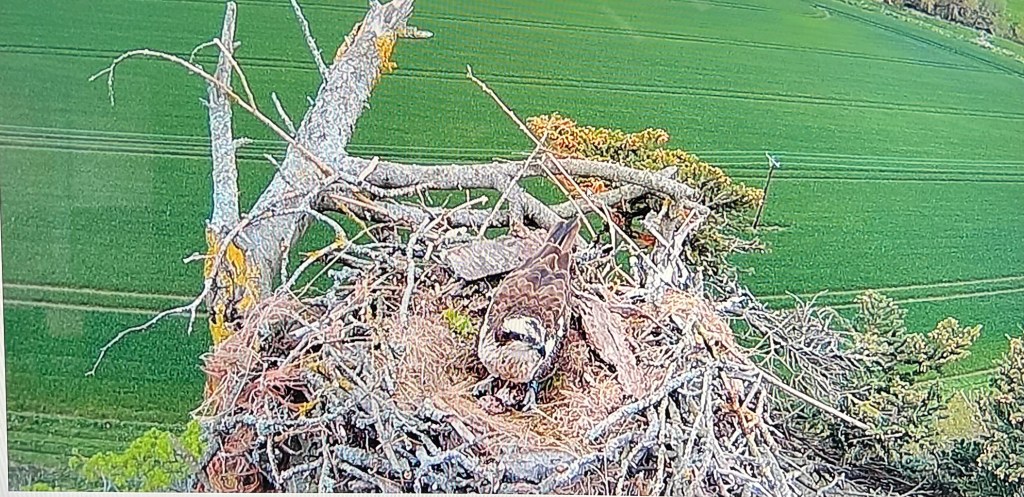
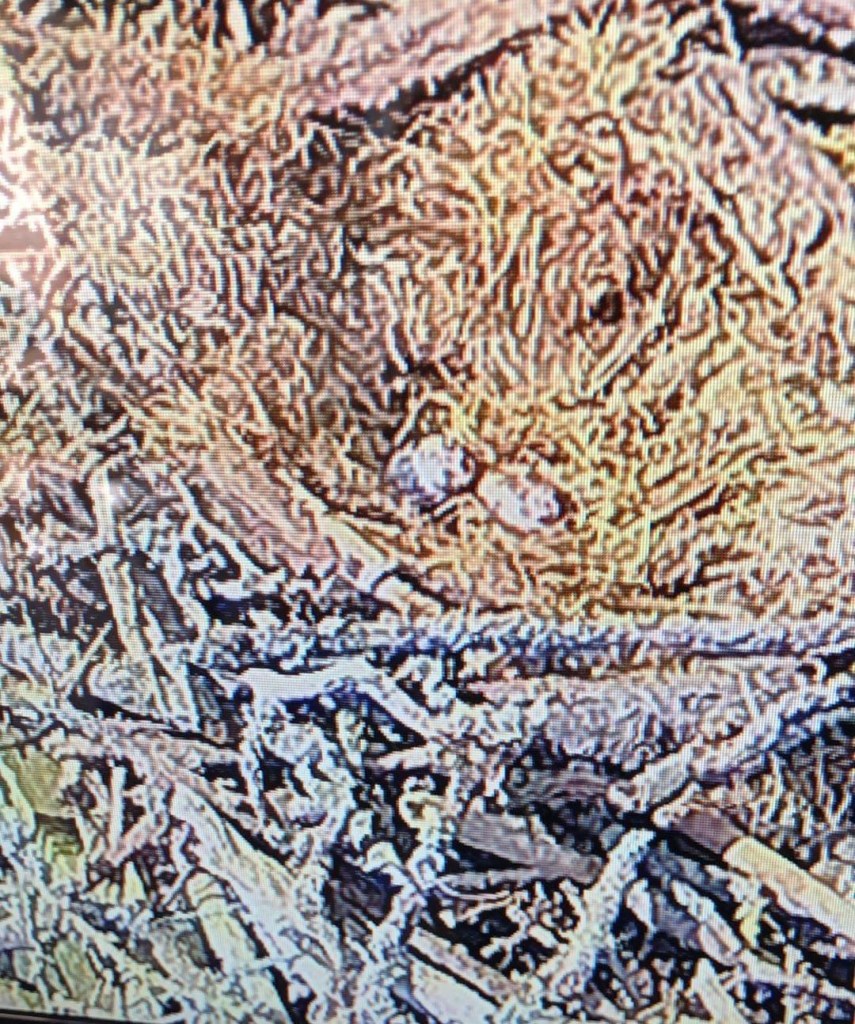
Well, excellent news and sad news in this short blog. The more exciting is that we have a second chick, which we first saw at just before 3pm when Juno stood up to collect a fish, another pike, from Samson. This little one was very sneaky because views of the contents of the nest at 1215 did not show any breaks in the second egg, although we are unable to zoom in our camera and check closely.
Mmmm. Pike again
The sad news is that there will only be two chicks. I had not seen 3 eggs together for about 10 days but hoped that the very deep soft grass in the centre of the nest meant that I wasn’t seeing the entire clutch in the brief glimpses I caught of it during the inclement weather. However, the weather improved today, Juno was standing up much more and it was clear that, as I had feared, one of the eggs had been lost. I don’t think it was predated as both parents have been meticulous in guarding the nest from the wiles of the crows, but I think it much more likely that, in the sometimes atrocious weather of high winds and driving rain in the past 2 weeks, it somehow got dislodged, perhaps during a handover, and ending up falling from the nest. It’s an unfortunate thing but, in many ways, the silver lining is that Juno as a first time parent will be able to concentrate on a smaller brood with a greater chance of success. This is particularly important because natural fish stocks are not as abundant as they were a few years ago. Only one of the lochs and rivers to which Samson has access within his fishing range is artificially stocked, so only having two chicks to feed will help him provide adequate supplies to his growing family.
So, a bit of a roller coaster couple of days but such a delight to at last have chicks again on the nest. I’ll bring you more news as the chicks grow. If you’re intending coming down to see them, they’ll only be cute and fluffy for a couple of weeks until they lose the fluff and transform, almost overnight, into creatures more resembling something out of Jurassic Park (other dinosaur movies are available), but their parents will still love them and so will I!!
For the first time in 5 years, and after so much heartache and disappointment in the intervening period, I can announce that we have a chick. Hatched out overnight, it looks strong and ready for breakfast. Let’s hope it doesn’t have to wait long. Proud new parent, Juno, is being very protective so we have had just glimpses so far but there will be more photos to follow.
Juno finally allowed us to see that there were 3 eggs and, at present, we are on track for the hatching window to open on 30 May.
Three eggs
She has continued to make me eat my words of last year and she has beenan attentive and careful incubator – when she has been allowed on the eggs. Samson clearly feels he has a lot of lost incubating time to make up as there have been no eggs for the past 4 years and is proving difficult to move when he is incubating. His main role is to catch fish and he’s been doing that, despite some really unpleasant conditions, but she should be doing the vast majority of the incubating and that’s just not the case during the day. She is willing to do so and often flies up to take her turn but he won’t budge and she hasn’t yet got the confidence to force him off the nest. At first, she would land on the nest perch but he would just ignore her. She then started landing on the nest itself and that worked some of the time but she will have to learn the technique that her predecessor, Delilah, had off to a tee. She would get her shoulder under his keel and with a quick flick roll him off the eggs and over. By the time he recovered, she was safely nestled down and he had no option other than to fly off. Juno will work it out but at present he is enjoying hunkering down out of the wind for long stretches of the day and she has to find a sheltered perch as best she is able until he decides otherwise. She became so frustrated earlier this week that she took herself off for a very quick trip to Kielder and back and was spotted intruding on their Nest 6. She was allowed to incubate when she returned and Samson was able to mollify her with a fish not long after.
C’mon Samson; it’s my turn!
It’s been mainly quiet as is often the case during incubation but there has been an unringed female osprey that hung around for several days and caused the pair a bit of concern. The worst was on Monday 9 May when she had a real go at Juno who was on the nest with Samson. The two females battled on the nest and in the immediate surrounds but Samson, bless him, stayed tight on the eggs, protecting them from any harm and probably got well trampled upon for his troubles. She now appears to have left the area but Juno does occasionally patrol the skies when Samson is incubating just to make sure that she hasn’t sneaked back.
Intruder patrol by Juno
I’ve mentioned before how there seems to be a constant battle between Samson and Brian (my colleague, photographer and fellow observer), as to whether or not Samson can get onto the nest with a freshly caught fish without Brian being able to take a photo of him. Samson is winning by about 978-3 at the moment since we started Border Ospreys! Well, it now appears that the competition has been extended to include my taking screenshotsof events on the nest. I came in one morning to see that one of them had erected a screen of beech leaves and branches, totally obscuring the centre of the nest and, potentially, any views of chicks from the camera. However, they had reckoned without the weather and one sustained gust of wind restored the view and deposited their screen over the side of the nest. I wait to see what they think of next.
We can still see you, Juno.
Well, I think that’s about it for news. We are now just over half way through the incubation period for the first egg and excitement is mounting here. I probably won’t write again before The Big Event unless there is something important to say but please keep your fingers and toes crossed for this family and come down and say hello if you’re visiting.
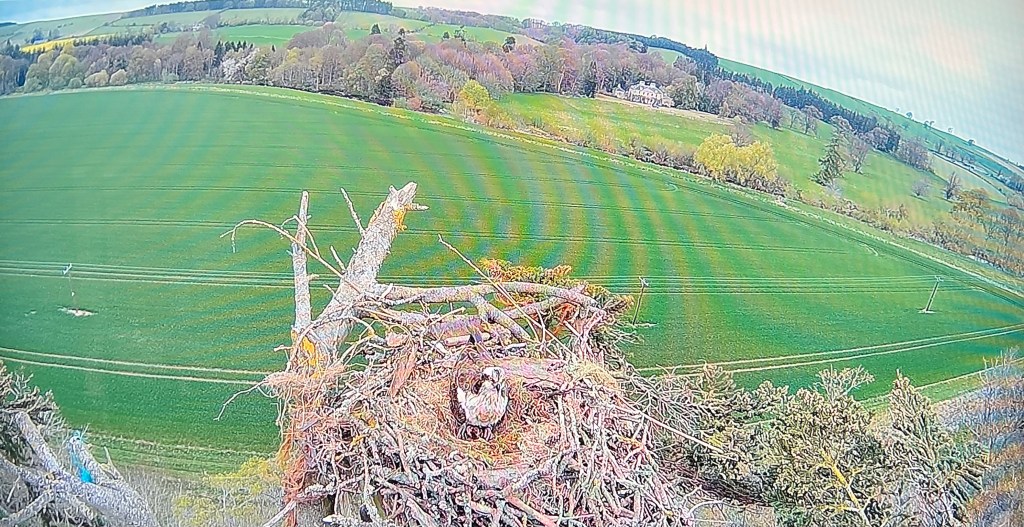
Well, I know you’ve all been waiting to hear whether Juno laid a third egg yesterday and I can tell you that she did…..probably. However, handover of incubating duties have been very slick, Juno seems to have particularly feathery pantaloons and the loss of the nest camera for 24 critical hours have combined to leave a tiny bit of doubt as to whether she managed a third egg or not. What I will say is that there was a very odd incident yesterday when Juno who was in the nest, suddenly jumped up, flew a circuit and then landed back on the nest for no apparent reason, almost as if she’d had an electric shock or someone had stuck a pin in her. Perhaps it might have been the surprise arrival of a third egg? Moreover, Samson seemed to be having far more difficulty incubating comfortably yesterday and today than he did earlier in the week, which might suggest a larger clutch than there was on Friday. The screenshots so far have been inconclusive.
How many eggs have you got under there, Juno?
I also promised to let you know of any other goings on during the past 10 days or so. Nest furnishing proceeded apace at the start of the period with both birds bringing in primarily soft material to furnish the nest having perhaps decided that they had done enough building of stick walls. As in previous years, man made rubbish continued to be mistaken for natural material and baler twine and bits of plastic continue to cause concern when they are deposited on the nest. Luckily, most has ended up outside the nest, thankfully as a result of a few windy days, but the threat is ever present. Juno has been particularly enthusiastic, on one occasion bringing in what looked like a giant wig! She felt that if she was going to spend the vast majority of May sitting on the nest, she was going to make absolutely sure that she was comfortable.
Juno bringing in the comfy chair
Since egg laying started, Samson has probably done more incubation than is normal for a male plus, of course, doing all the fishing. Juno has been content to sit in the dead tree and only take over incubating when she wanted him to go fishing. However, in the last day or so, she has started actively seeking to take her turn on the eggs, although she has still to learn the eviction technique of the shoulder under Samson’s body when he’s reluctant to give up the cosy nest.
There have been one or two intruding ospreys in the area but they have been seen off some distance away from the nest, often before they are even in sight of the human observers. Crow bashing has been tackled by whoever is on the nest perch and, with one exception where Juno got carried away with Samson’s pursuit of a pair and joined in, the incubator has been able to sit tight. The herons which appeared to be setting up home alongside the burn that runs under the nest tree have now decided that the other side of the River Teviot is a far safer option, especially as one of them was hotly pursued by an irate Juno on Thursday right across the field and the river before she called off the attack.
Samson escorting an intruding female osprey from the area
So now is the time where we just sit and wait. The hatching window opens at the very end of the month and the signs are encouraging that Samson and Juno are developing into a good team. She seems to be learning fast and developing her instincts equally quickly and Samson is doing a great job as teacher and provider. Nevertheless, May is going to seem a very long month and I’m trying hard to keep a lid on expectations from this new pairing. I’ll let you know how things develop.
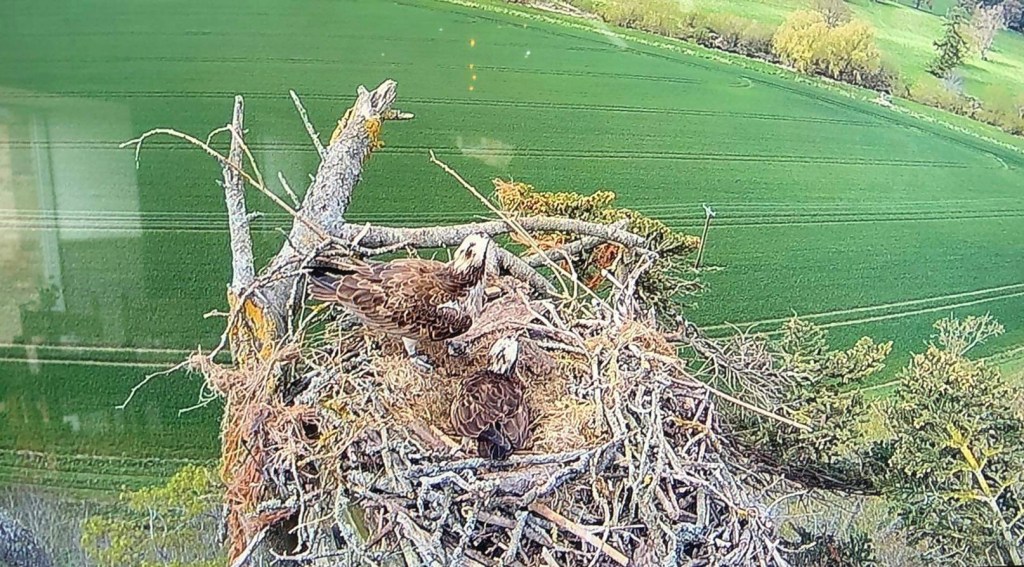
A very quick note to say that Juno has laid a second egg today, right on time. As a first time breeder, she may stop at 2 but, if she lays a third, it’s likely to be on Saturday. So far, Samson has been the keener of the two to incubate but she has been very good and sitting tight when it’s been her turn, ignoring crows trying to bait her and keeping that precious egg nice and warm and safe. I’ll write again at the weekend and tell you a bit more about the past week and what’s been happening.
A rather grainy screen shot of the two eggsChangeover time. Juno is the one standing.
As those of you who read my last blog will know, one very important condition had to be met before I was prepared to give our female, JW6, a name. She was such a nuisance last year with chasing off any rivals but then not being prepared to settle down with Samson, that I said that she wouldn’t get a name until……SHE LAID AN EGG! That occurred with very little fuss this afternoon, but she hid it successfully from view in a very deep cup in the centre of the nest until about 6.30 this evening, when a shuffle of it allowed us to see and take a quick screenshot.
Proud Juno and her first egg
Juno and Samson have both been extremely attentive though his attempts to mate with her again weren’t particularly welcomed this afternoon. The long incubation now starts and I really hope that, as an inexperienced parent, she has the patience to sit out the 37-42 day period. Her character has changed significantly over the past few days and it’s obvious that her instincts, so sadly lacking last year, have really kicked in, so I hope she’ll be fine. A second egg may follow in about 72 hours and possibly a third a further 72 hours on again.
There are many hazards the eggs(s) will face before any chicks hatch. Abandonment, predation, accidental damage by the parents, infertile eggs are all dangers which can occur between now and hatching time. I will update you further in the coming days but for now, we are celebrating the arrival of the first egg at Border Ospreys in 5 years; it’s been a long wait.
I know many of you have been wondering what has been happening since Samson appeared last Monday and whether he’d found a willing female this year. Well, I wanted to make sure that we weren’t witnessing a flash in the pan but he has found a female and she seems very interested in breeding. What some of who are regulars readers of the blog may be more surprised to hear is that it is JW6. Last year she was, to be frank, a real headache. She chased away any other females but showed little interest in Samson, the nest or any aspect of breeding. When she arrived this year she again spent long periods of time away from the nest area for the first few days, including visiting various nest sites at Kielder, and then wasn’t seen at all for several days. It looked like she may have gone for good but, she was clearly keeping an eye on the nest site because the morning following his arrival, there she was on the dead tree calling at him for fish.
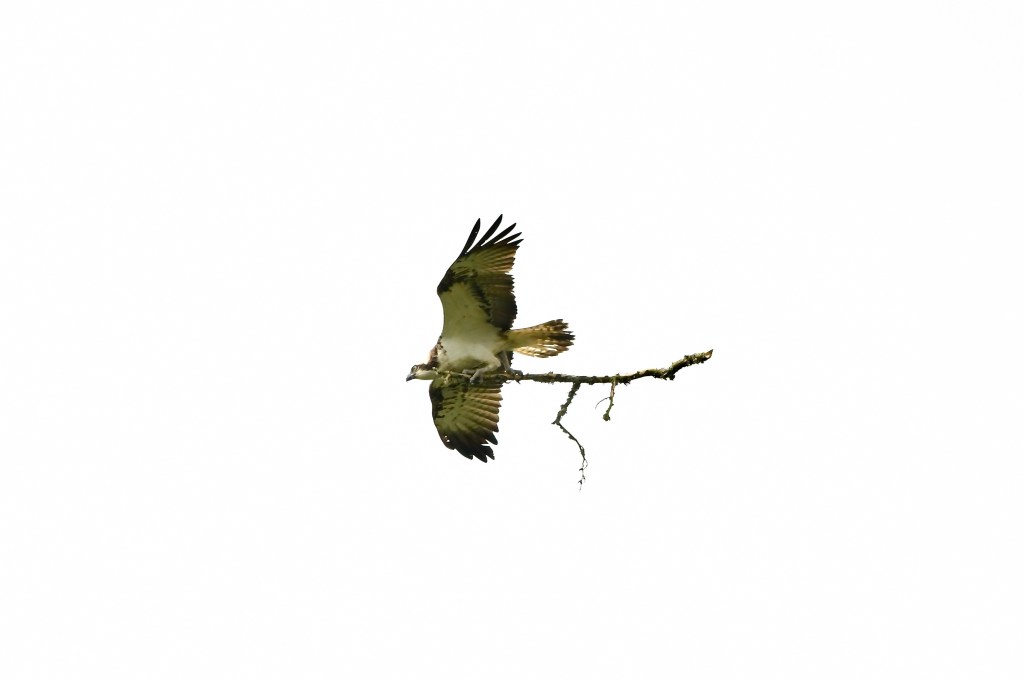
Samson bringing in a “small tree“The happy couple discussing nursery decoration
Since then she has displayed exactly the sort of behaviour we would expect from a female preparing to breed. She has allowed Samson to mate regularly with her, she has spent far more time than she has done previously in the nest itself, rearranging the nest material, and has been regularly seen collecting more material herself. Most importantly, she has stayed in and around the nest area, not wandering out of sight for more than very short trips.
JW6 on patrolSupper arriving
All in all, things look very promising and, while I’m not counting my osprey chicks, we are hopeful that we may see eggs laid in the next week. I promised that I would give her a name when she laid her first egg; I have a few ideas but if you think of an appropriate name, please let me know but you’d best make it soon!
After significant frustration, the nest camera is now working and a picture can be seen in the restaurant once more, so I hope that we may be able to soon bring you exciting news with photographic evidence. Please keep your fingers and toes crossed and I’ll let you know when something happens.
Well, having kept us on the edge of our chairs, given us sleepless nights and worried our fingernails down to the quick, Samson arrived this morning and was on the nest at 0913. He’s since had a wash and brush up and is now working away redecorating the nest after our feeble attempts to make it look appealing. He’ll need to go fishing soon as his crop looks empty but so delighted to see him again, nearly two weeks after the date he had arrived last year had passed.
A bedraggled, but safe, Samson surveying his territory.
A very quick blog from your intrepid reporter standing in the middle of a field on a very cold but sunny Sunday morning, to tell you that JW6, our female from last year, has returned. An osprey was first seen here on 2 Apr at 1630 and her identity was confirmed this morning. We are still awaiting Samson, as is she. She now appears to have gone fishing after her shrill food begging (that pair of lungs would have convinced us it was her even if we hadn’t seen her leg ring!) didn’t produce a fish bearing male.
Well, it has been over two weeks since we have seen (or heard!) JW6 around the nest site, so we can safely assume that she has started her migration. I’m not aware of any sightings of her as she journeyed south through England and she should be well on her way back to coastal Central West Africa or the Iberian peninsula, wherever it is that she spends her winters. Samson stayed on longer and I last spotted him on 22 Aug. None of those who walk regularly along by the river and tell me about anything of interest happening with the birds, have seen him since either, so it looks like he too has left for warmer climes. I wish them both well in their travels now and next Spring. We hope to see them back at the end of March or the beginning of April.
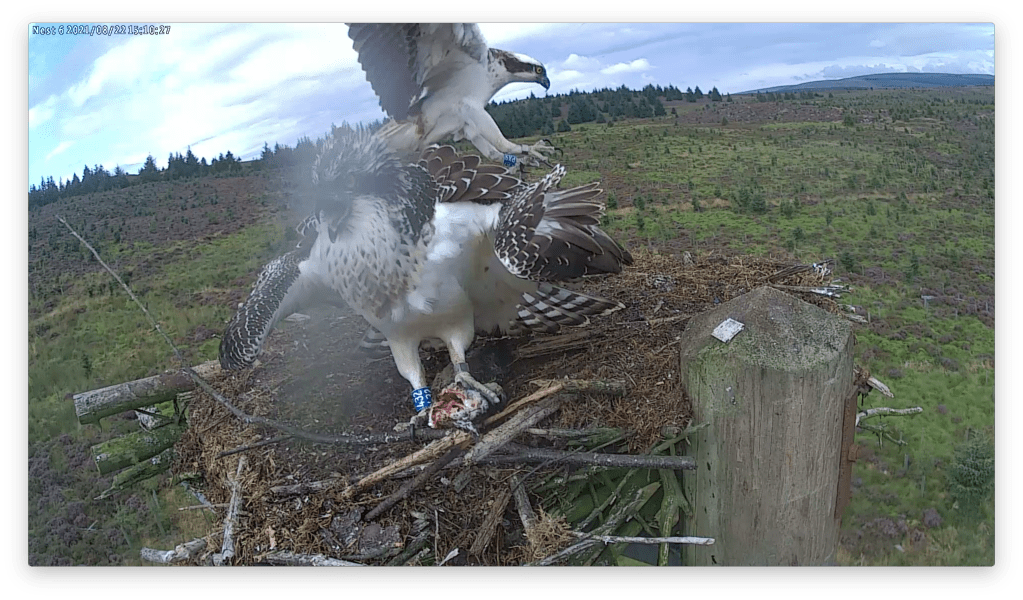
For those of you who have followed the Border Osprey birds for a while, you will recall that PX9 and PY0, the males from the 2017 brood have been seen regularly at Kielder. They have continued to intrude and generally make nuisances of themselves and are clearly eyeing up grabbing an existing nest if they can next year. Neither seem to have attracted a mate and might be hoping that any nest will come with a sitting female tenant but a more likely outcome might be that they build a nest for themselves in the area and settle down with a mate as part of the growing Kielder “colony”. The last sighting Kielder had of either bird was PX9 on 26 Aug when he intruded on Nest 6, much to the annoyance of one of this year’s resident juveniles. Again, fingers crossed for successful migrations South and North for both these young males who have decided their permanent home lies close to the rich fishing waters of Kielder Reservoir.
PX9 checking out Nest 6 on 22 Aug, despite the annoyance of 432, one of the resident juveniles who is guarding its afternoon tea. (Photograph courtesy of Forestry England)
In the meantime, there is plenty of work to be done to make things ready for our own birds’ return. I’ve taken lots of advice on why females seemed reluctant to settle down, particularly this year, and while we will never really know, one reason might be that the nest is being more and more overshadowed by branches growing up and around it. Ospreys seem to prefer nesting as close as possible to the highest point in a tree and certainly the incubating or brooding female needs to be able to see all around to watch for approaching danger, especially when the male is away fishing. This is certainly no longer the case with our nest, although it probably was when the then pair of ospreys first built there about a decade ago. Samson is very bonded to this nest and probably doesn’t see it as an issue but new females would be unwilling to settle down in a nest where vision was so obscured. You may recall that JW6 was very reluctant to sit in the centre of the nest, even when encouraged to do so by Samson. So, during the next month or so, we will be doing some cutting back of the branches obscuring the view from the nest and we hope that it will solve Samson’s problem of not being able to retain the sustained interest of a female osprey. We will also do our normal tidying of the nest and clearing up of the rubbish brought in by Samson, including removing the brown plastic croc shoe that has graced the nest for most of the year! The tree branches shading the solar panels will also be trimmed back so that the battery can remain charged far more efficiently than was the case this year.
In summary of my blogs this season, it has been, without doubt, a very disappointing year as we had such hopes that 3AF would return and breed with Samson. However, in her numerous trips around last year, it seems she found other likely sites and, after staying for a couple of days with him, she disappeared and I can only hope that she did find another partner and may have even bred. I don’t think we’ve ever had so many intruding females and poor Samson’s head must have been spinning. I think he brought 3 fish in on one day and, on each occasion, there was a different demanding female on the nest! If the exposing of the nest doesn’t work, we’ll have to find him a book on attaining and retaining the perfect mate and see if that helps. I’m running out of ideas otherwise. I really am hopeful about next year, especially once we’ve carried out the tree work because much of what happened here this year can be explained if that was the problem. I hope JW6 comes back willing to settle down and breed. She is a feisty bird and excellent at defending the nest and, with a positive attitude to breeding, will make a great mate for Samson. However, she only gets a name if she does so! Until then she remains JW6.
It only remains for me to thank various people without whom I could not operate Border Ospreys. To the owner of Born in Scotland, John Henderson, for his support and to the staff there who have supplied endless cups of tea, brownies and humour as well as patiently enduring update briefs from me about the birds so that they can answer any questions asked by the public in the restaurant. To Brian Clark, my invaluable friend and fellow volunteer who travels from his home in Devon to assist with monitoring for the season, helping with talking to the public and answering questions and producing such wonderful photographs, despite his reluctance to accept praise for them. To Jain Jameson from Techstar for her computer wizardry and eternal good humour; Chris Mutter from Scott & Foggon for his electronics expertise and guidance; Kirsty Smith from Dragon Wood Forestry for her tree climbing and surgery skills; and, latterly, Michael Thomson from MT Tree Care, who was able to do some emergency repairs in the tree and who was still up the tree when Samson arrived a week earlier than previously, reacting rapidly and without question to to my panic calls to remove himself rapidly from the vicinity of the nest! To Tony Lightley, my guide and, for the last 4 years unused, ringer. Finally, to Joanna Dailey from Kielder Ospreys, a source of knowledge, regular correspondence, often of the “your bird is intruding on one of my nests” type, but mainly of unstinting support and encouragement.
I must not forget my thanks to you all for bearing with me during another barren season. It’s been an interesting ride this year and I wouldn’t have missed it for the world but I really think we need some chicks next year. So anyone with links to fairy godmothers, tooth fairies, Hogwarts, Gandalf or anyone else who might help, please put in a special request for 2022 to be a successful breeding year for the Border Ospreys. Until then, I wish you a happy and safe rest of this year and hope to see you in person at Born in Scotland or via here in your comments when next season comes around.
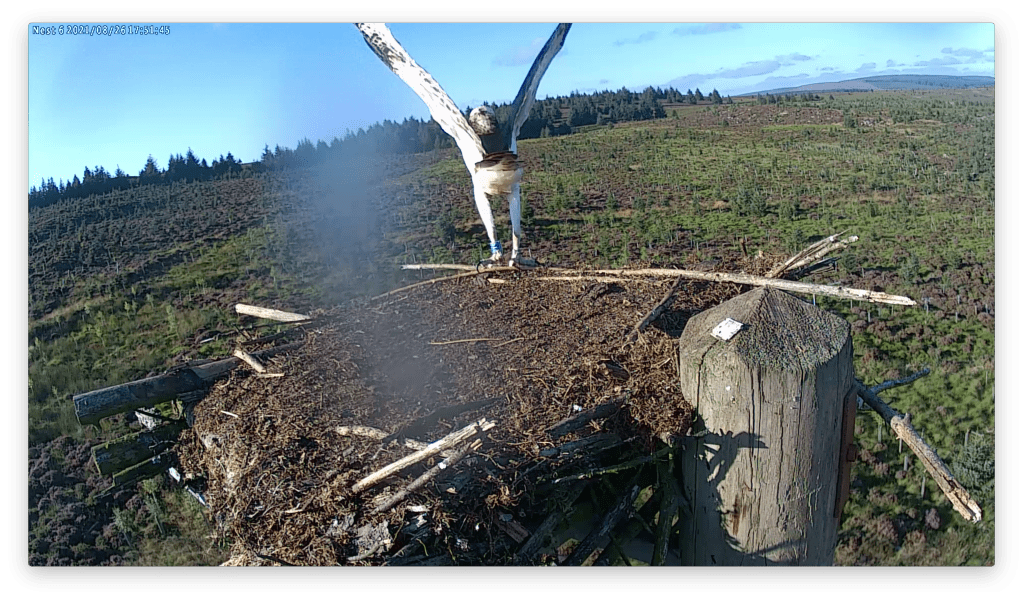
PX9 waving good bye to the 2021 season (Photograph courtesy of Forestry England)





 Border Ospreys