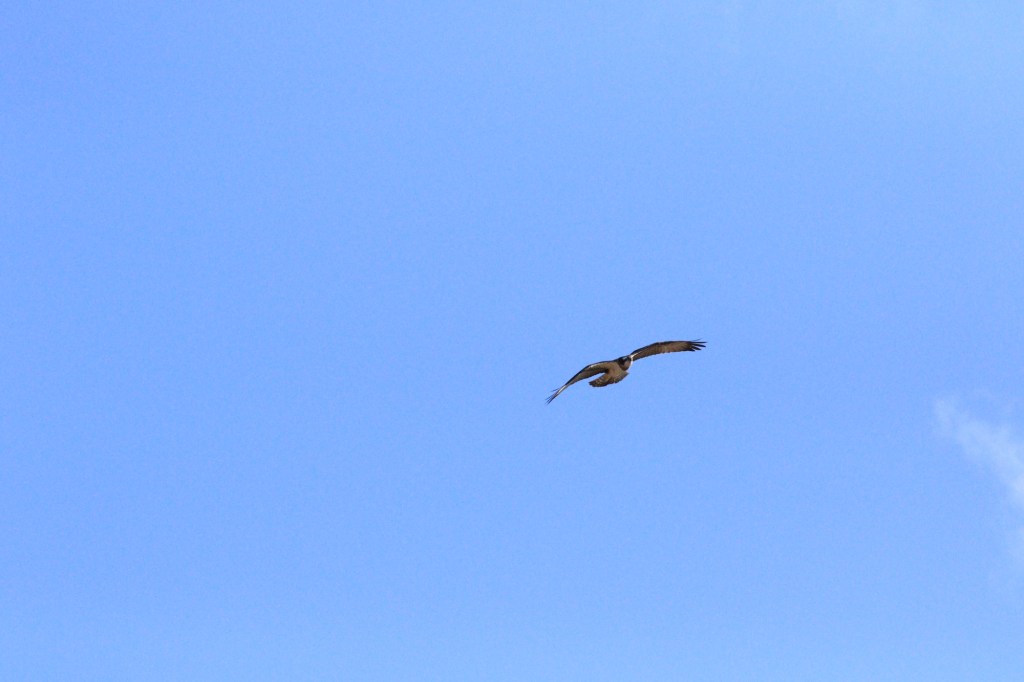
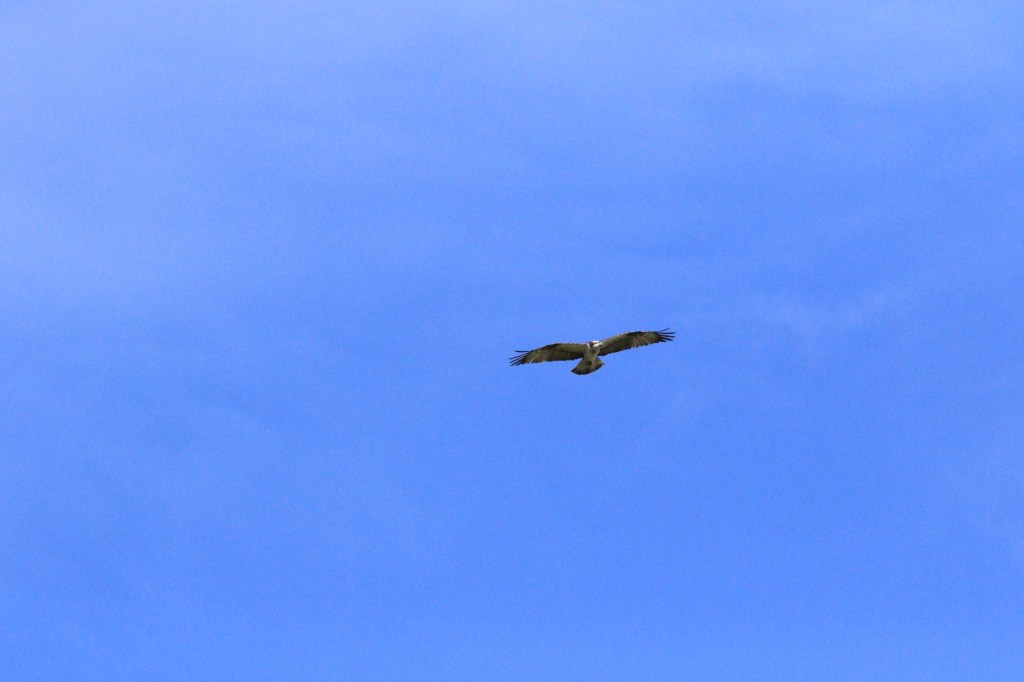
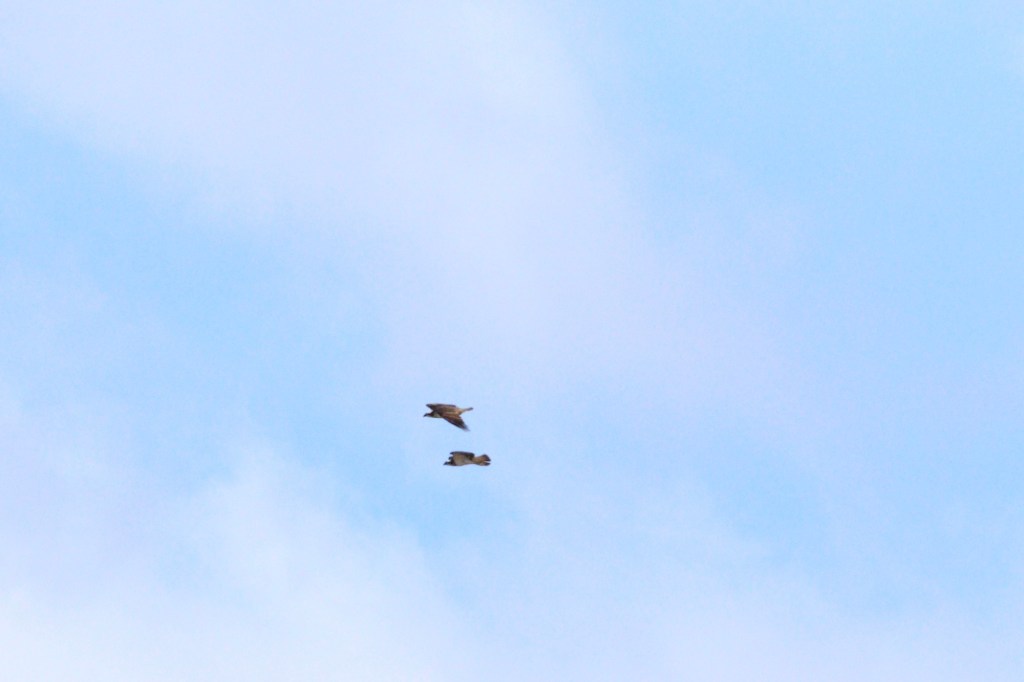
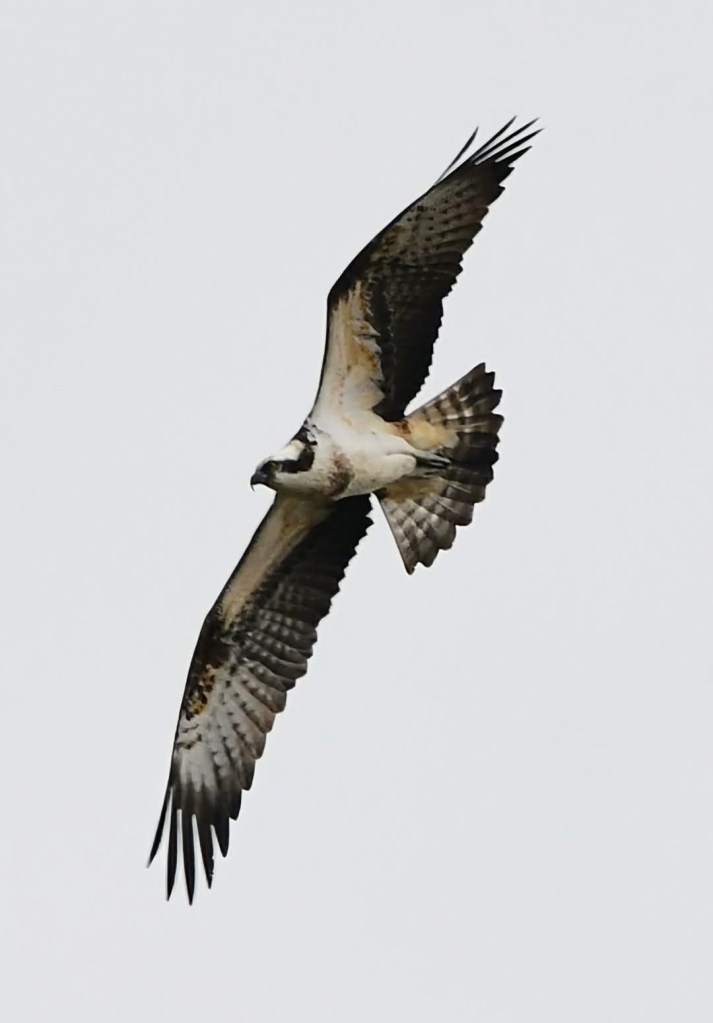
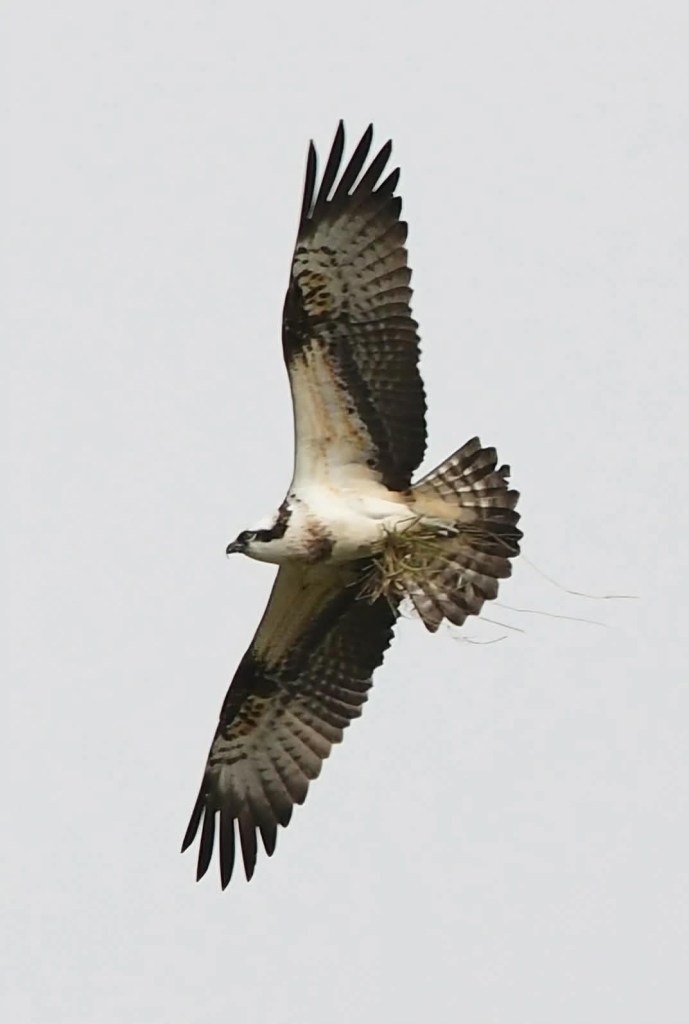
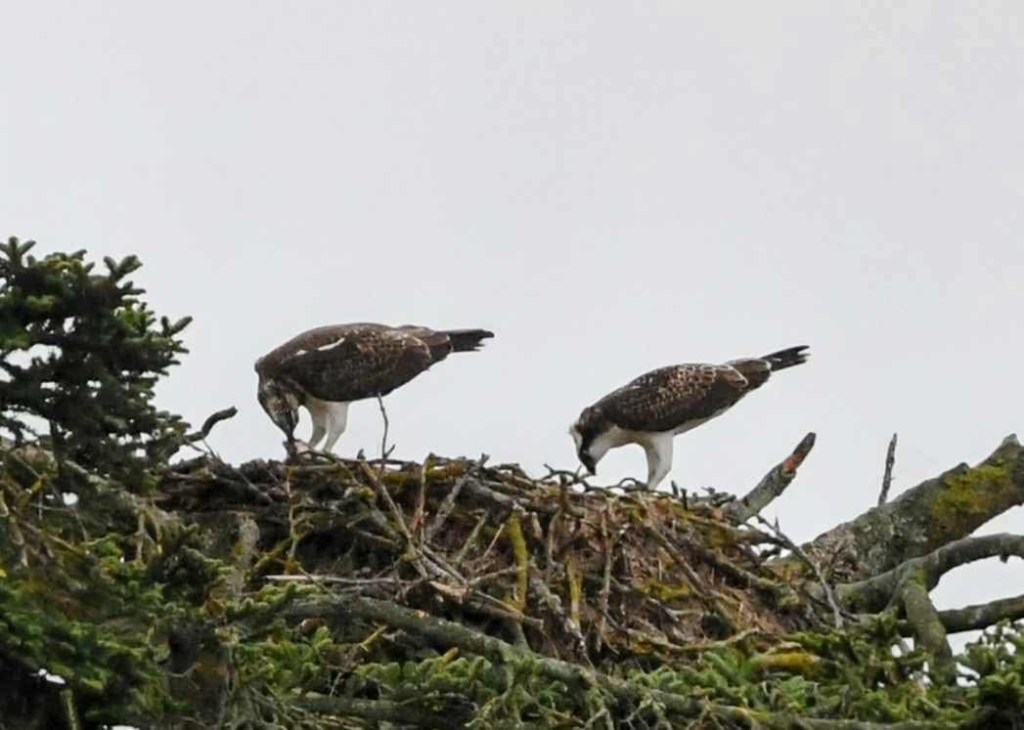
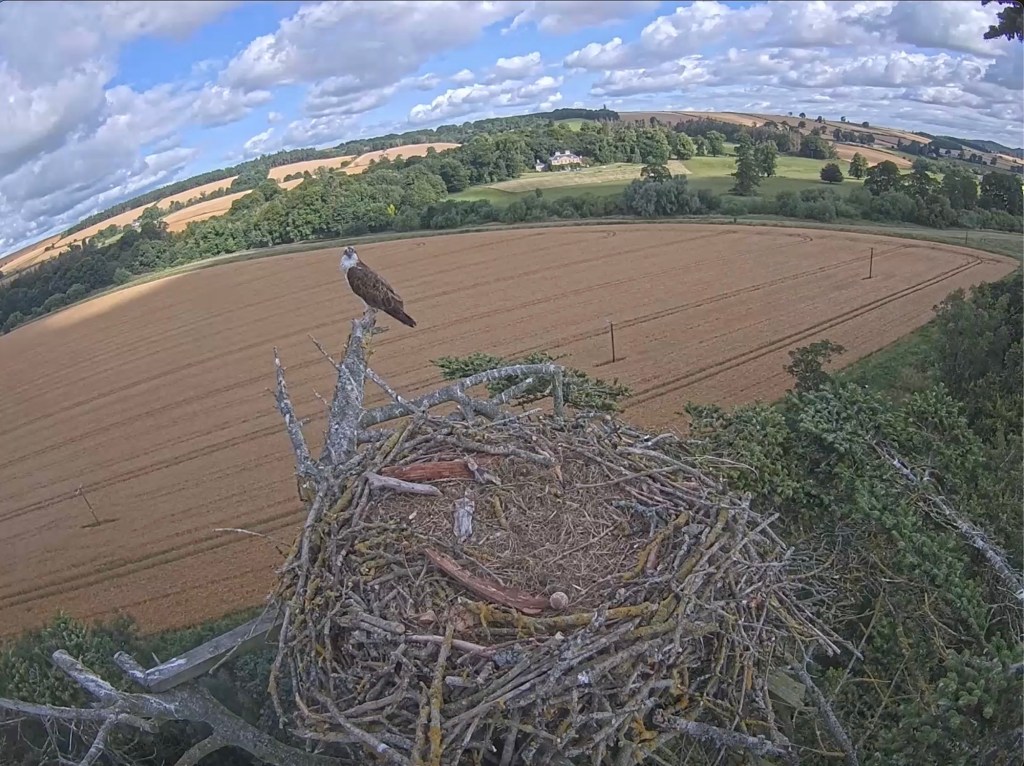
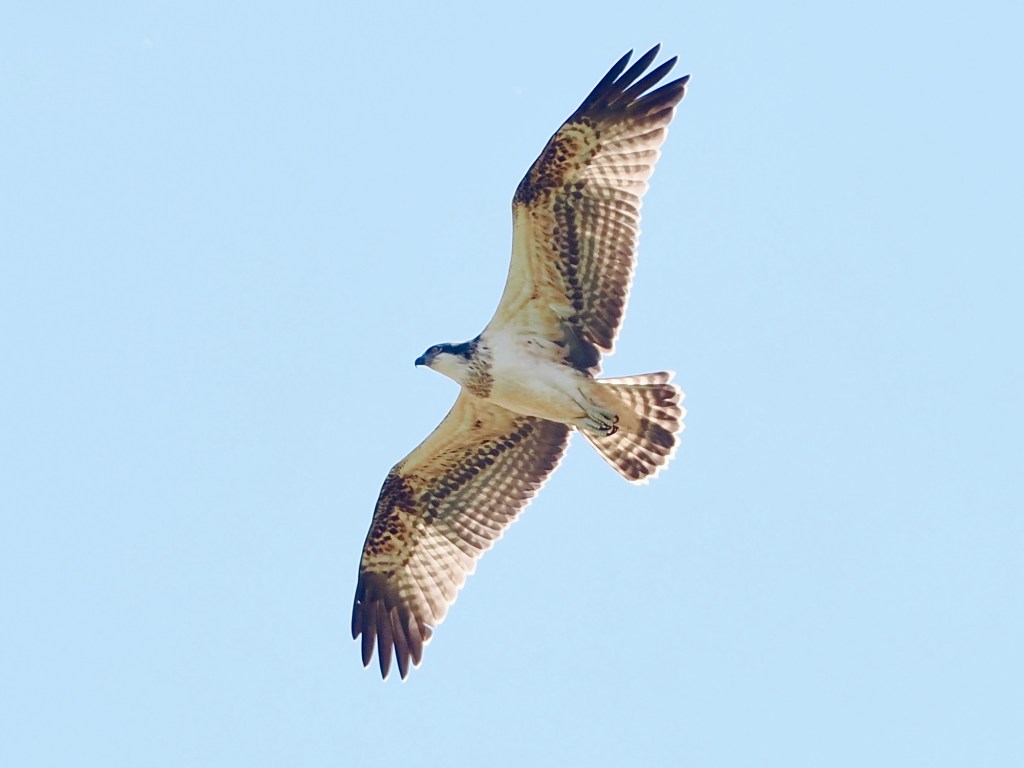
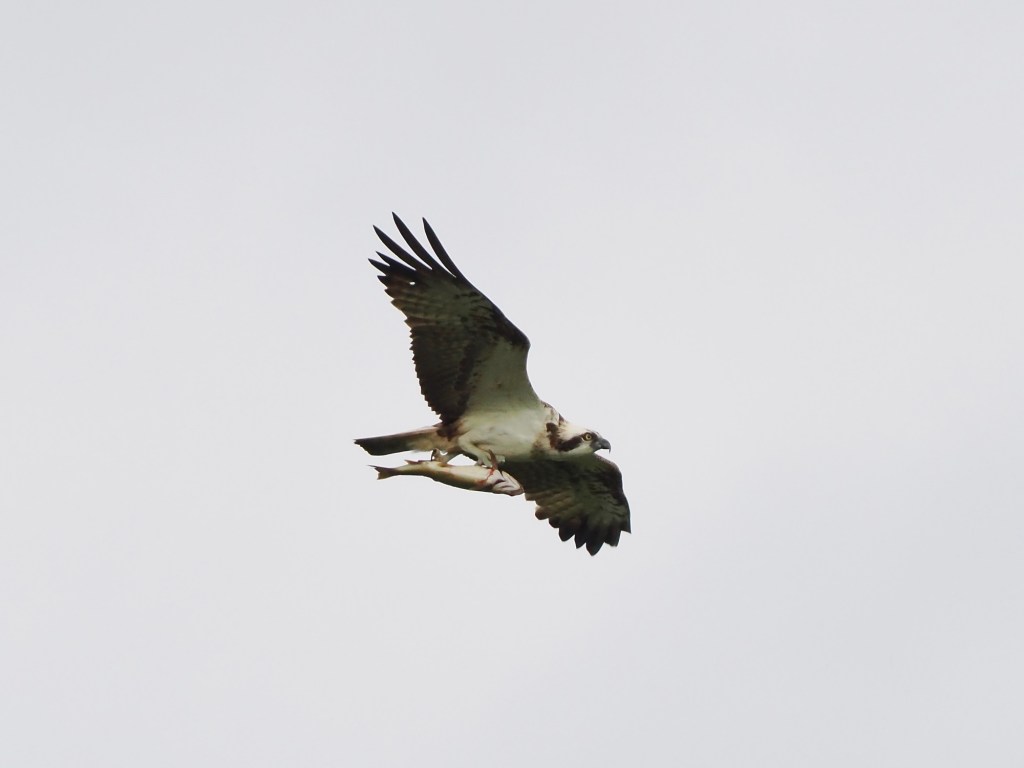
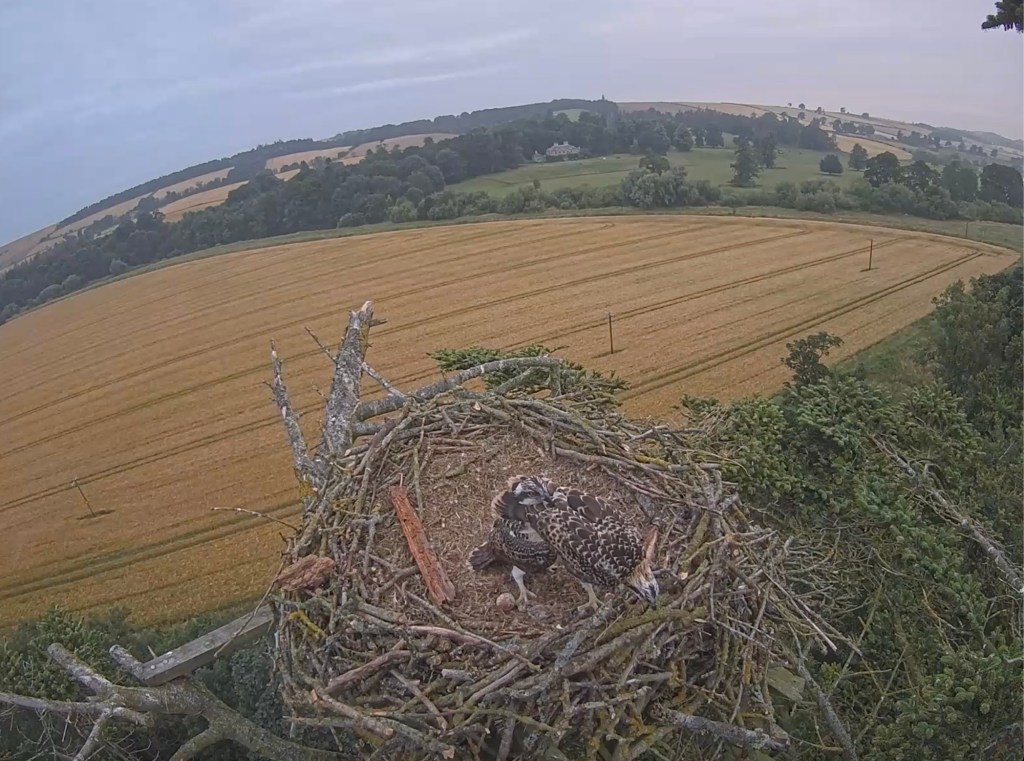
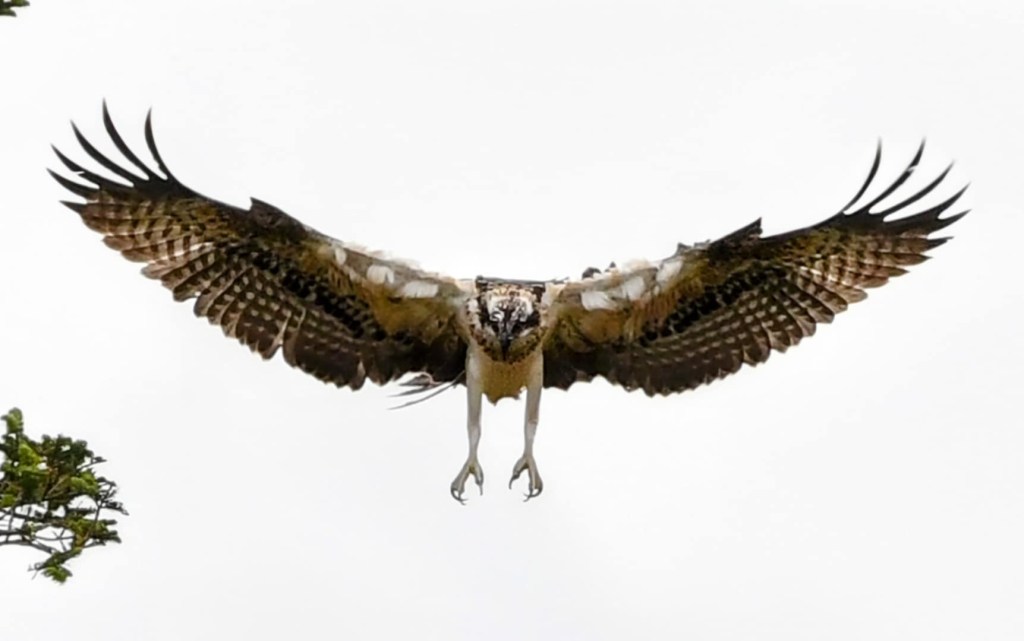
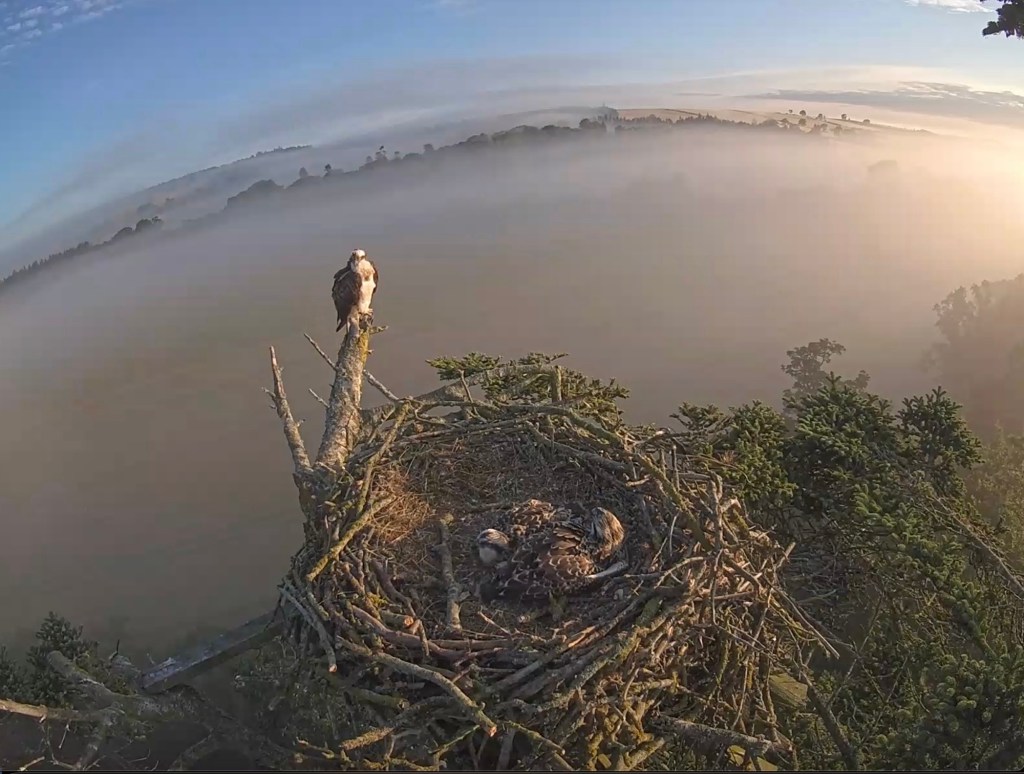
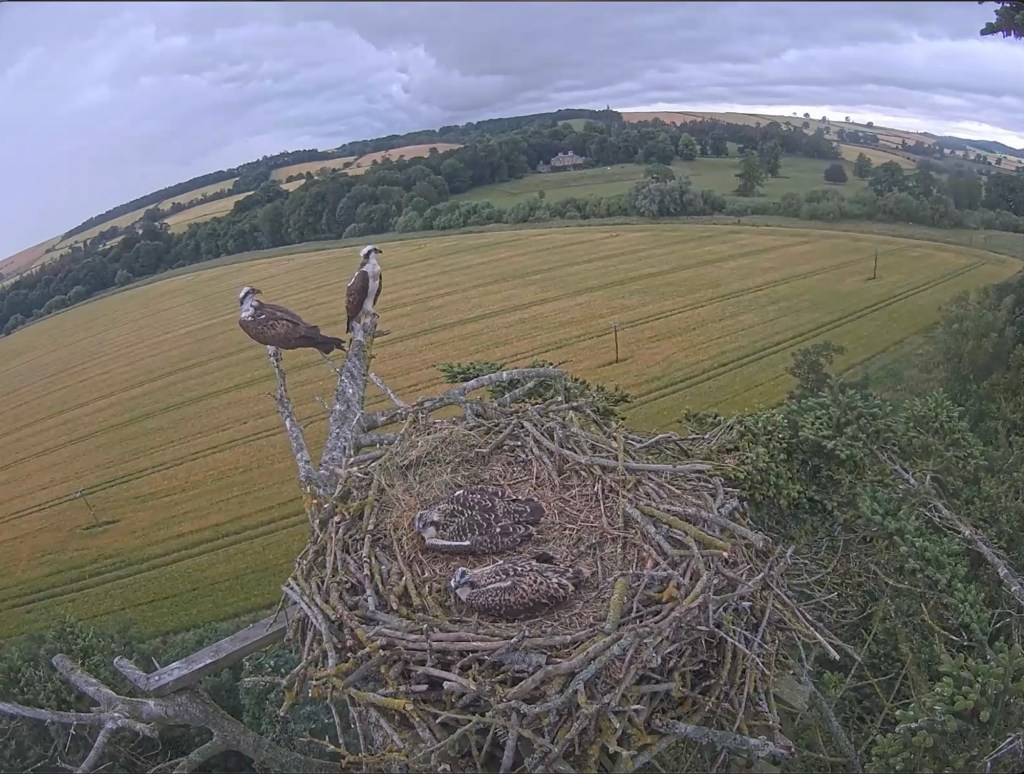
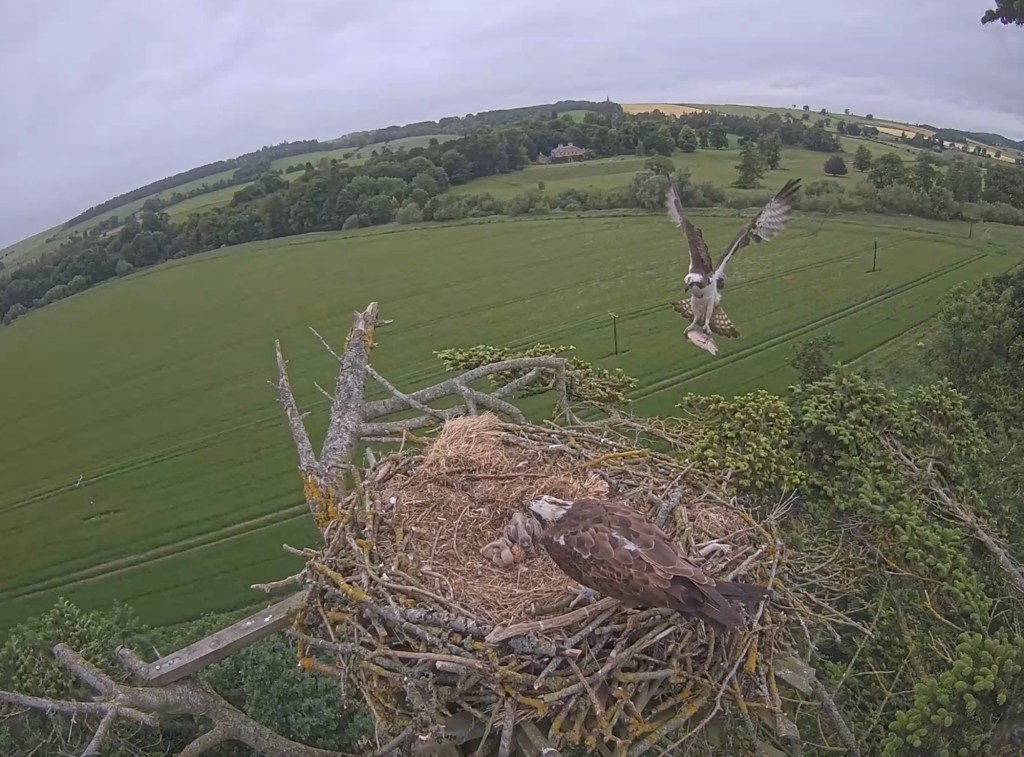
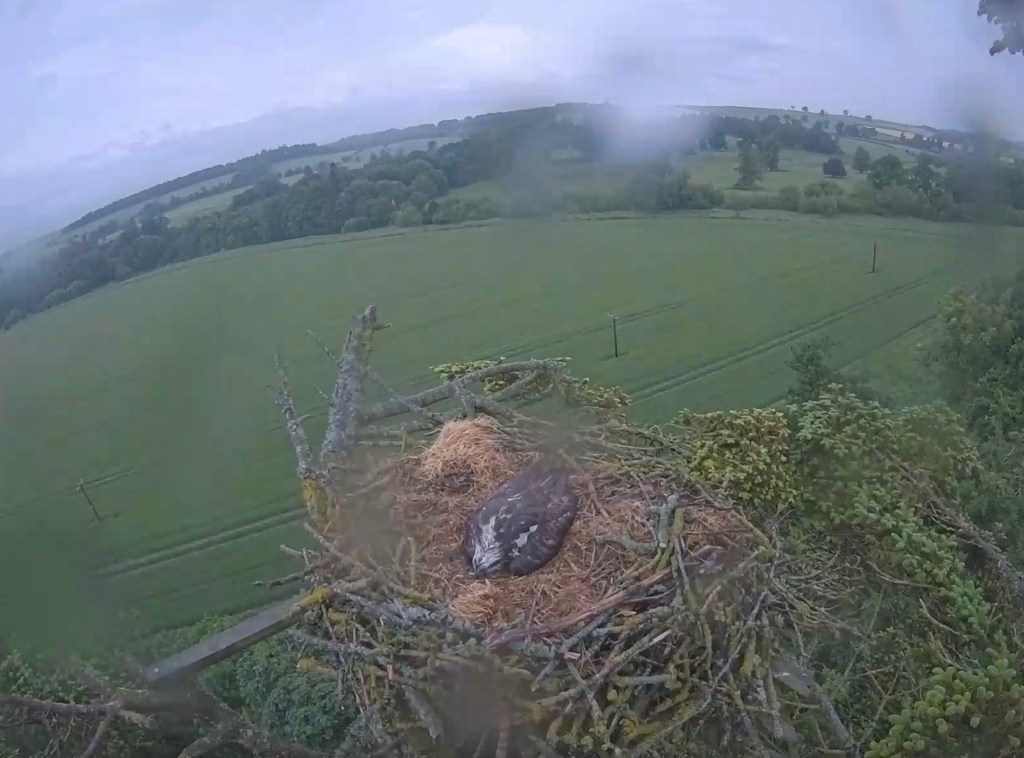
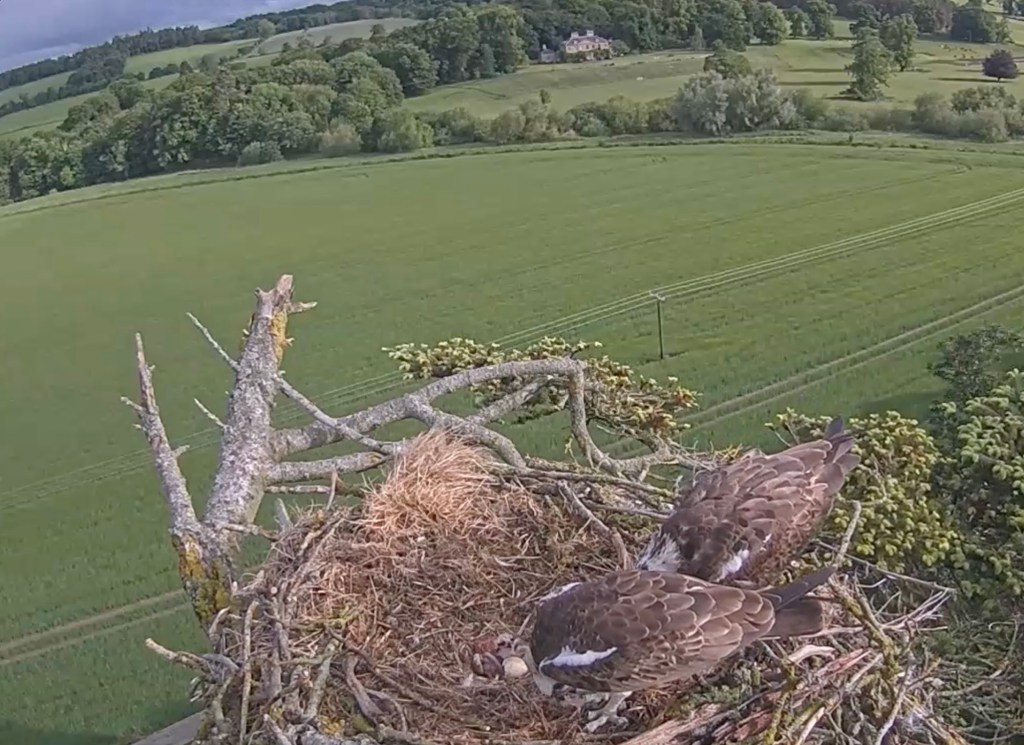
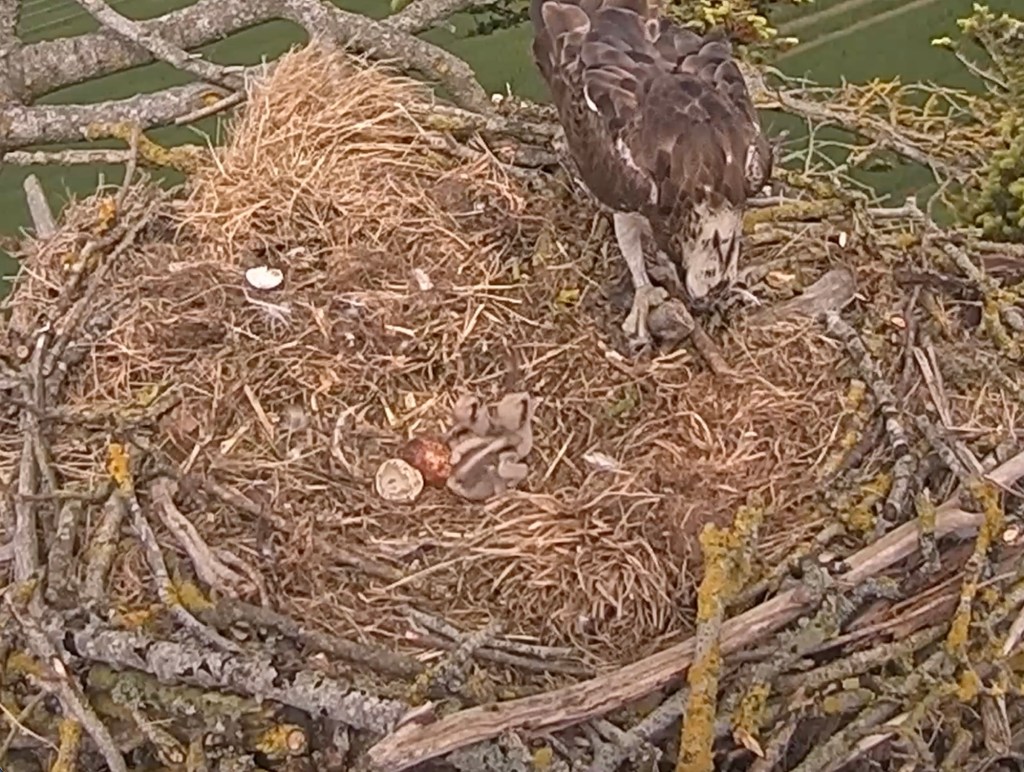
At long last, it looks as if the whole family has finally decided to migrate, at least 2 weeks later than the normal. C1 was last seen on Sat 13 Sep and C2 was last seen (and heard!) on Mon 15 Sep. I’d imagine that Samson probably migrated hot on the tail feathers of C2 just to ensure he didn’t change his mind and come back. There was a time when Samson thought he’d never leave, I’m sure. If anyone has seen them since these dates, please let me know because, as you can appreciate, getting the departure dates accurate is not an exact science.
In the last weeks, as well as exploring the area, they have been spending a lot of time over and in the river, flying, watching, learning and practising. We all appreciate that they spend a lot of time refinishing their fishing techniques but what is sometimes overlooked is that, even when not fishing or attempting to fish, they will also be learning (and strengthening their wing muscles) to do the other critical thing and that is working out how to get airborne from the water. It is a totally different technique from being able to “push off” from something solid, as watching a video of any osprey doing so would show. It’s vital that they learn how to master this skill, even before they catch their first fish, because failure to get airborne from water could be fatal. We have seen plenty of evidence of our juveniles returning to the nest soggy and scraggy. We haven’t seen them come back with anything but empty talons, but we can assume that the lesson of emerging from water straight into flight has been well learned.
So that’s about it for this year unless something untoward happens. Sadly, we won’t receive any more news about the chicks as we weren’t able to get them ringed this year and by the time they come back in 2 years’ time, assuming they survive, they will look completely different. The good thing is that any unringed bird we see over the nest from 2027 could be C2, as males tend to return to their natal areas, or any new unringed female at any of the monitored nests in the country could be C1. We will never know but we can certainly be optimistic. They have a long and difficult migration before them but have been well prepared for it and are stuffed full of the River Teviot’s best fish. They will also have to battle for a good fishing spot when they reach their winter grounds. However, if they manage to cope with that, come Spring next year, life will get considerably easier for them as all the adult birds will fly north and they will only have to compete with other year old and some 2 year old birds. Hopefully, they will thrive and Spring 2027 will see them winging their way north to find their own breeding territories. Fingers crossed that they make it.
In the meantime, I have a long list of jobs that I should have been doing over the Summer and Spring will be here again before we know it. The skies at present are full of incoming pink footed geese but, come March and April, I will be looking forward to and listening for a familiar silhouette and the piercing cry of a returning osprey. Thank you for your company, either in person or digitally; I will see you all next year. Just as a reminder, here are some photos of the family of 2025.
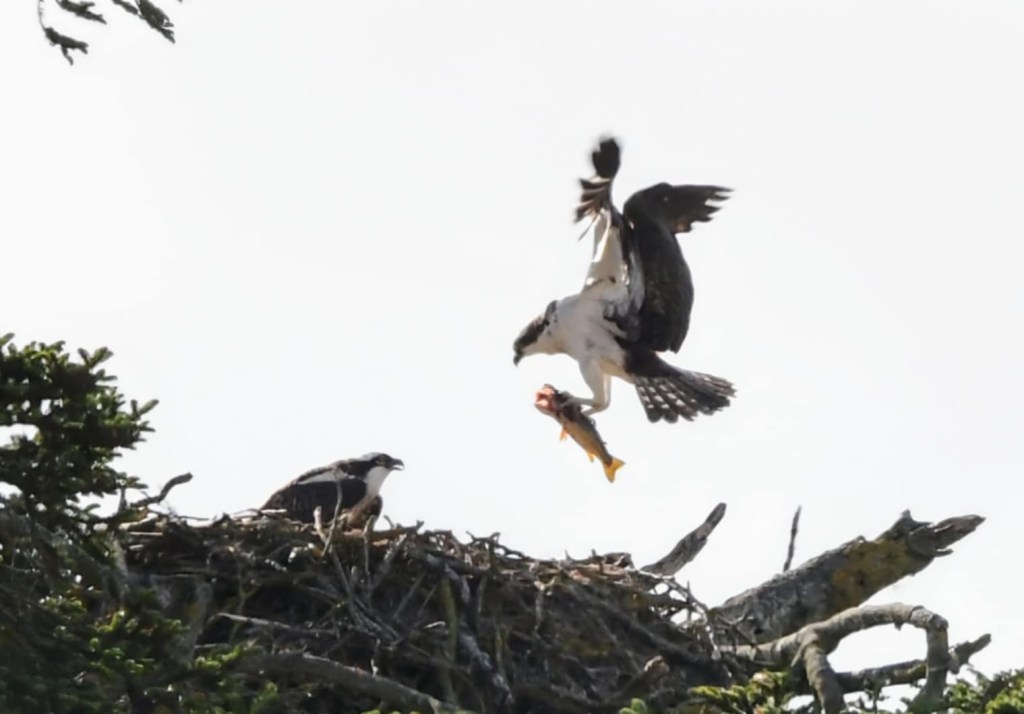
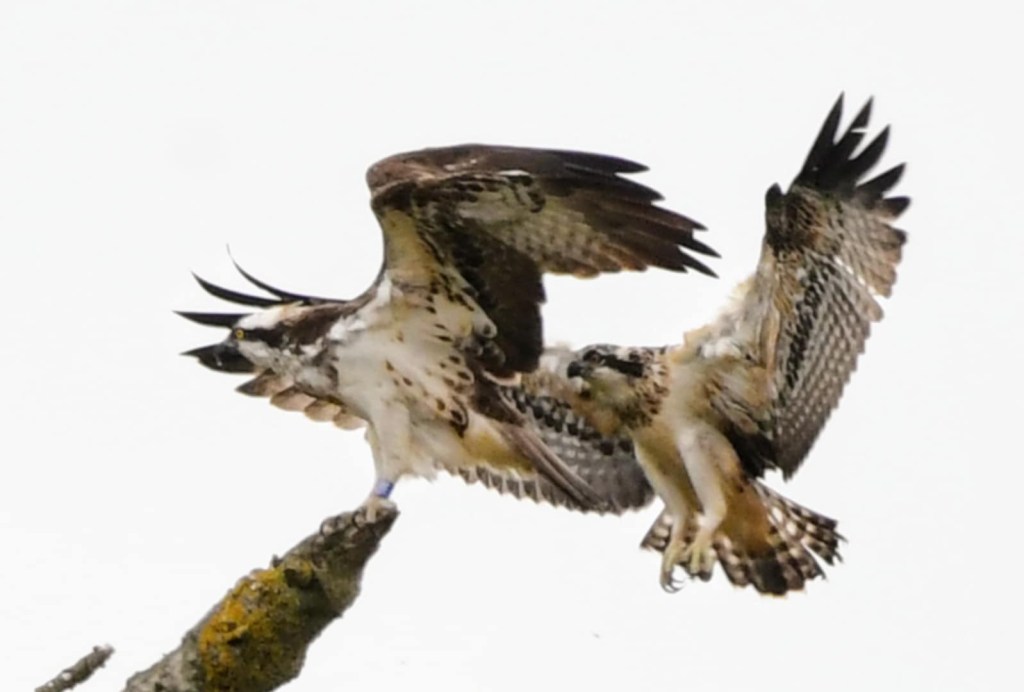
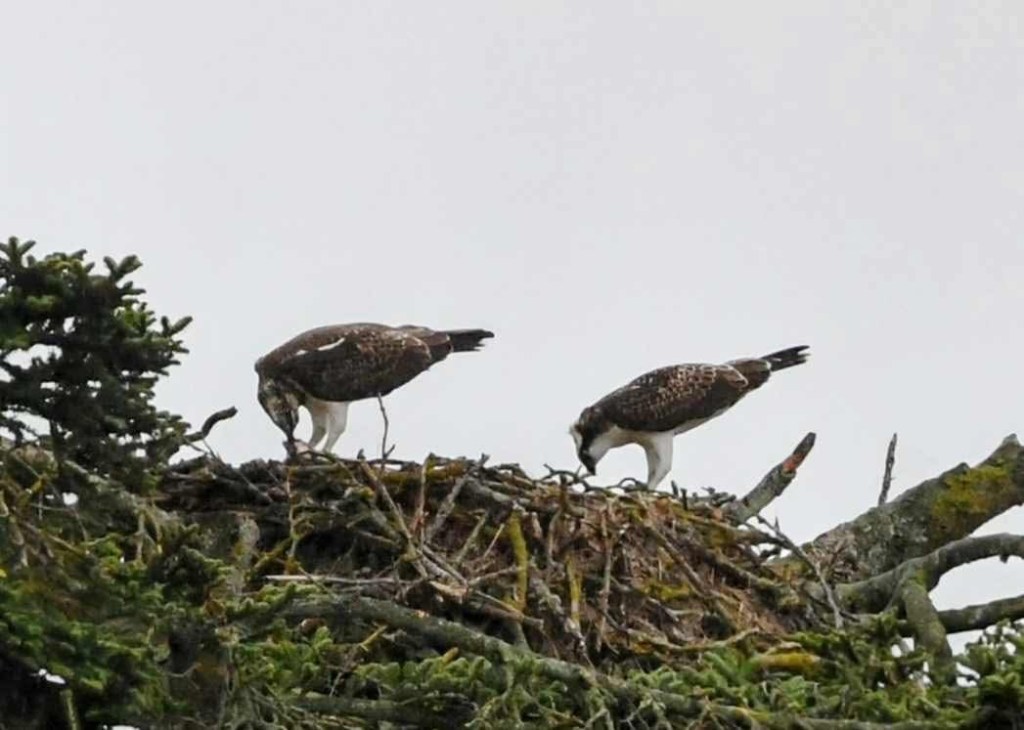
Samson bringing in lunch for C2 (photo courtesy of K Ramsay)500 (Augusta) trying to avoid being knocked off the nest perch by C1 (photo courtesy of K Ramsay)C1 in all her glory (photo courtesy of K Langridge)C1 (on the left) and C2 engaging in their favourite activity – of eating (photo courtesy of K Ramsay)
I’ve been waiting and waiting so I could tell you that the birds had all departed, Samson having done the last security check on the nest (you know the routine – stuff unplugged, water turned off, windows secured, external doors locked etc) but it was getting later and later, so the normal blog for this time of year has been replaced by yet another “how-goes -it” blog.
C1 (on left) and C2 both kept well supplied by Samson (photo courtesy K Ramsay)
Augusta left the area several weeks ago. She hasn’t been seen on any other nests, unlike last year, but I’m just assuming she is now well on her way to, if not arrived at, her wintering grounds. However, the rest of the family are still around. I saw all 3 birds yesterday and C2 seems to have caught up with getting his share of the food being provided. This is a mixed bit of news. It’s great that he’s now well fed but he’s managing to do that by staying close to the nest so he can see Samson coming and can grab the fish before C1 gets there. That means that he is not flying around and familiarising himself with the area or practising his fishing technique as much as perhaps he should. C1, on the other hand, is often not seen for several hours but is usually back for the mid afternoon fish delivery/deliveries.
Samson delivering to C2 (photo courtesy K Ramsay)
Poor old Samson, in the meantime, is patiently continuing to feed the youngsters but must be secretly hoping that they’ll hurry up and go. This is certainly the latest we’ve had our resident ospreys still here and he must be ready to start his own journey. I’ve never seen him leave before his chicks but I know this can happen on other nests to force the chicks to depart but I just can’t imagine him doing it. So we’ve reached a bit of an impasse. I think C1 could go first as the more independent of the 2. Once she’s gone, C2 will be able to move around more freely and should gain confidence and set off himself fairly soon. Samson usually leaves as soon as the last chick has departed. I imagine he won’t break that habit this year.
Samson with yet more food for the chicks (photo courtesy K Ramsay)
I’m a little limited in coverage of the nest at the moment as my trusty camera system, having worked well all season, has thrown a few wiggly amps problems at me which haven’t been easy to solve. Nevertheless, we have had observers on the ground and I must thank Kirsteen Ramsay for her photos which adorn this blog.
I expect my next blog will be when the 3 have left but goodness knows when that will be; we’re on new ground here. However, I’m on holiday at the beginning of next month so they need to get their skates on. Perhaps they’re waiting for me to give them a lift but they’ll be unlucky. I’m going beyond the wintering grounds of most UK ospreys and it’s a non-stop flight, so they’ll have to rely on their own wings to get them there.
I’ll let you know when Samson succeeds in packing them off on their migration. Now, where did he put his passport…?
After a fair amount of wing flapping, hopping, stepping and jumping, and generally faffing, C2 finally fledged today at 0946 and did a very competent circuit, even leading C1 onto the nest and making a smooth landing despite her bearing down behind him. As tends to happen, he then almost immediately took off again, and again, and again. You can only imagine what thoughts are going through a fledgling’s mind when they first take to the skies and experience the freedom that flight gives them.
C2’s fledge
C1 in the meantime has quickly gained lots of confidence on the wing and we were amazed to see her, when she was being mobbed by swallows, actually doing a barrel roll to chase them off. All it needed was the Battle of Britain theme music and we would have been set! She is quite happy to jump in and grab a fish from Samson, and even from Augusta’s talons, and she doesn’t give C2 a look in. He is going to have to push himself forward a bit more or he will lose out as Augusta steps back from her feeding duties and leaves the chicks to manage on their own.
C1 checking out the nosey humans
If you’re in the area, it’s a good time to come and see the spectacular sight of 4 ospreys wheeling about the sky. However, you shouldn’t delay because it won’t last for long, as Augusta will be feeding herself up prior to migrating and will probably be gone by the middle of the month.
Before we get onto the main news of this blog I just wanted to mention an amusing incident from a few days ago. Fish were a little harder to come by last week and we had a bit more attempted bullying by C1 on C2 but he has now discovered a marvellous way of keeping his sister at bay. When she tried to get to the back of his head, he turned and pushed his bottom up into her face. The net result was a beak full of tail feathers and a mystified looking bully. Well done, C2!
C1’s bullying attempt foiled
After much wing flapping, hovering and a fair bit of peering over the edge of the nest, C1 fledged today at 1348. Yesterday, she’d hovered straight up out of sight and onto the branch to which the camera is secured. That clearly took all of her courage and it was a good 90 minutes before she had enough confidence to lower herself back down onto the nest. For the rest of yesterday, her hovers were much more reserved but it was only a matter of timing for her today. It was virtually windless, so she was able to control her movements a lot better than yesterday and she spent the morning eating and building up her courage. A couple of lovely ladies from Hawick, who didn’t know about the ospreys here and had just come for a walk, came up to watch the screen and so were able to witness the magical moment of C1’s maiden flight. All 3 of us were on the edge of our chairs as she did a big jump across the nest, had a peer over the edge, a nice rouse of her feathers and then finally launched from the nest, to a cheer from us. She did a couple of circuits and I was touched to see that Samson, who was hiding away in one of his man sheds, immediately got airborne to monitor her flight and make sure she was safe. She came in a bit fast and with all talons extended, ready to grab whatever bit of nest she could, and landed right on Augusta’s back! There followed a bit of a scrabble as Augusta tried to get her off and C1 was determined not to unhook her claws from the safety of something solid. After getting her breath back, there was no stopping her and she spent the next hour or so doing circuits and practising a variety of landing techniques, before withdrawing, exhausted by the excitement, to the bottom of the nest for a snooze.
C1’s first flight (note Samson keeping an eye on her from a distance)C1 looking slightly shocked at being able to fly (courtesy: K Ramsay)Where’s the nest?? (courtesy: K Ramsay)
C2 in the meantime was totally unimpressed by her efforts but was keen to try it for himself, wing beating enthusiastically and even managing to get airborne, just, a couple of times. It won’t be long before he joins his sister and then the final stage will commence.
Samson will continue to bring food in but the big change will be that Augusta will start to disengage herself from her nest duties and will start fishing for herself to build up strength for her migration. She will probably only have a couple more weeks here before setting off to begin her journey south. I imagine she will go directly this time, unlike last year where she spent about a month loitering around the Tweed area before being seen at Foulshaw Moss nest in Cumbria on 2 Sep where she was hoping (but failed) to persuade the male there to feed her. In the meantime, the youngsters will build up their strength and flying skills and will get to know the area as well as hone their instinctive abilities to fish. Now is a great time to look for ospreys as the fledgling birds will all be doing the same thing and so there will be far more ospreys than usual on the wing and around stretches of water. So if you are lucky enough to live around an area where ospreys are known to be, keep your eyes to the skies and your ears open for their characteristic calling.
Hello everyone. Thank you for your patience. I hadn’t realised that it was quite so long since I’d updated you on the progress at the nest. As you will, I hope, have realised that no news has definitely been good news and the chicks have been thriving with a good supply of fish and attentive parents. They have exploded in size and one of the advantages of still having the infertile egg in the nest is that you can easily compare how they have grown. Chick no 1 (let’s call it C1)’s foot is now the same size as the egg. It seems incredible to think that the whole chick fitted inside a similar one only a few weeks ago. The development of the wings has been the most impressive to me. From little stubs they have grown into long, graceful wings that, in a couple of weeks, will bear them up into the sky with powerful strokes as a precursor to their long migration; it’s almost unbelievable. Food has been mostly plentiful and both chicks spent a lot of the first few weeks either eating or in a food coma/sleeping it off. They have grown far more active in the last couple of weeks and are now fully into the wing exercising phase. Seeing the chaos that 2 chicks can have on a nest when they are both flapping at the same time, I hate to think how they coped on nests with 4 chicks! There has been very little sibling rivalry although 2 days of bad weather when Samson was unable to bring as much food as normal did result in a few nasty sessions where C1 gave its sibling a bit of a battering. It looks brutal when they grab the nape of the other’s neck and shake them backwards and forwards but, thankfully, it only lasted a couple of days and C2 quickly learned how to shield itself from the worst of the bullying.
A reminder of C1and C2’s sizes 6 weeks agoC2 showing its wing at just under 6 weeks old
The chicks have also started to feed themselves and have attempted to steal from 500’s talons as soon as she has relieved Samson of his catch. She has started to delay taking the fish from Samson, encouraging the chicks to come forward but that can be risky, as Samson will see any delay in exchanging the fish as a sign that he can keep it and will fly off with it. There’s an amusing scene when he arrives and the other 3 are looking at each other, working out who’s going to make the first move, while he’s alert for an opportunity to escape with the prize. He no doubt has memories of previous chicks fighting over fish and grabbing his legs in a frenzy to be first and is trying to prevent a reoccurrence.
When not feeding the chicks, 500 has spent time bringing in sticks (she is still an amateur in comparison with the pair at Loch Arkaig for those of you who follow that nest, but she’s bringing in some very weird shapes and sizes of branch) and also talons full of grass to provide a good landing and take off surface on the nest for when the chicks finally fledge.
Goodness only knows where that will fit, Augusta!!
We have an intruding osprey on most days but they stay well away and out of view of the camera so I can’t tell how many intrusions are by different birds. Augusta caught a fish, a grayling, on one day when Samson had been struggling with the weather. The chicks were slow to realise that she had brought something in but then C1 pounced and grabbed the fish for itself. I was a little concerned that C2 had had very little up to that stage in the day but Samson redeemed himself only a few minutes later by bringing in a sizeable trout which Augusta, C2 and then he enjoyed while C1 was struggling with its grayling. The rest of her time is spent on the nest perch or close to the nest but not always in sight of the camera. Samson is spending virtually no time in the nest, only what time he needs to deliver fish but when the family are temporarily all satisfied, he sometimes takes time to sit on the nest perch and look proudly out on his domain.
The family (from left to right: 500 (Augusta), Samson, C1 and C2)
The only downside is that it looks like that we will be unable to get the chicks ringed this year. Our ringer is unable to climb at present and can’t find another climber to do this aspect of the work in the timescale required. As I’m sure you’ll appreciate, as with so many aspects of osprey life, the window of opportunity for ringing the chicks is very small. They have to be large enough to be able to fit the rings snugly around their ankles without them slipping off or pinching too tightly but young enough to not try and prematurely fledge when the nest is approached; the nest is about 130 ft up from the field. We have now just about reached the latter stage and so ringing will become impractical and dangerous for the chicks. If it doesn’t happen and we aren’t able to confirm all the data we take at the same time, we will also have difficulty in deciding the sex of the birds. Weight and dimensions are the most accurate way we have but I’m going to hazard a guess that C1 is female. She is much bigger than C2, even more so than can be expected with the 4 days’ difference in age, and has the thicker ankles and legs that are normally associated with the females. C2 is more difficult to judge but could be a smaller female or a male towards the top end of the range; for the purposes of distinguishing them on here, I will refer to C2 as a male. No doubt, those assumptions are entirely wrong and the birds will have fooled me once again, but I’ll stick with it, regardless.
Samson enjoying some ‘me’ time (courtesy of Brian Clark)
So, the next thing is going to be the fledge of the two chicks. It’s always a heart in mouth time. Some launch off, very confident, and others are far more wary. Those of you who have been with me for a while will recall that, 2 years ago, our male did a graceful launch, flight and landing when he fledged. The female, on the other hand, crashed through branches on take off and only just managed to pull away to avoid coming down in the field. She then ‘arrived’ (I can’t call it a landing) on the nest perch with her talons out desperately trying to grip onto anything firm while at the same time dislodging her brother! We have a very benign surrounding area with large fields and no dense plantations of fir trees where chicks can get lost. Nevertheless, it is a worrying time. It’s now 10 years since we had to rescue a chick that had come down in a field of tall crops and couldn’t see out or get any lift to fly out. Luckily, we saw it and were able to rescue it and it flew back safely to the nest but the danger was clear.
I’ll let you know how fledging goes and chat about how the nest and family dynamics change once both birds fledge. See you then. In the meantime, I’ll remind you of that crazy first landing by the 2023 female chick.
I’m delighted to report that everything is going well, so far, on our nest, with Samson supplying fish on a very regular basis and 500 (Augusta) quickly becoming proficient at feeding the bottomless pits that are their 2 chicks.
Yet another fish delivery
The 4 days’ difference in age is very apparent, especially as chick #1 has now lost its fluff and is well into the ‘dinosaur’ stage, which is when growth seems to be particularly fast. Chick #2 is starting to follow suit and will continue to do its best to catch its sibling up. They are very well behaved at mealtimes, due to the abundance of food provided, and I’ve only seen the very occasional tiff, often started by chick #2! It hasn’t worked out that pecking its sibling is not a clever idea, especially when one is not yet very fast across the nest. Another bit of progress is that Augusta has now started to allow Samson to feed the chicks, something he has been desperate to do.
Samson gently feeding chick #2, closely supervised by 500
The third egg is still on the nest and can occasionally get in the way of feeding. I’d like to see the back of it but 500 still collects it under her when she broods the chicks and doesn’t seem to realise it’s unviable. She was very quick to stop incubating the eggs last year when the clutch failed, so I’m hoping she will soon push it out to the side of the nest and be done with it.
We’ve had good weather for most of the time but the 14th saw torrential rain with poor old 500 doing her best to keep the chicks warm and dry.
500’s unwelcome spa day
We’ve had a couple more intrusions over the last couple of weeks but only a very persistent 724, a bird hatched on a local nest in 2022, has been identified.
So, a positive report from our nest in all respects. Our hatchings were later than on many of the nests that have cameras installed, so even though several are getting to the ringing stage, we are still some way off that. We will let you know of any news as the chicks continue to grow.
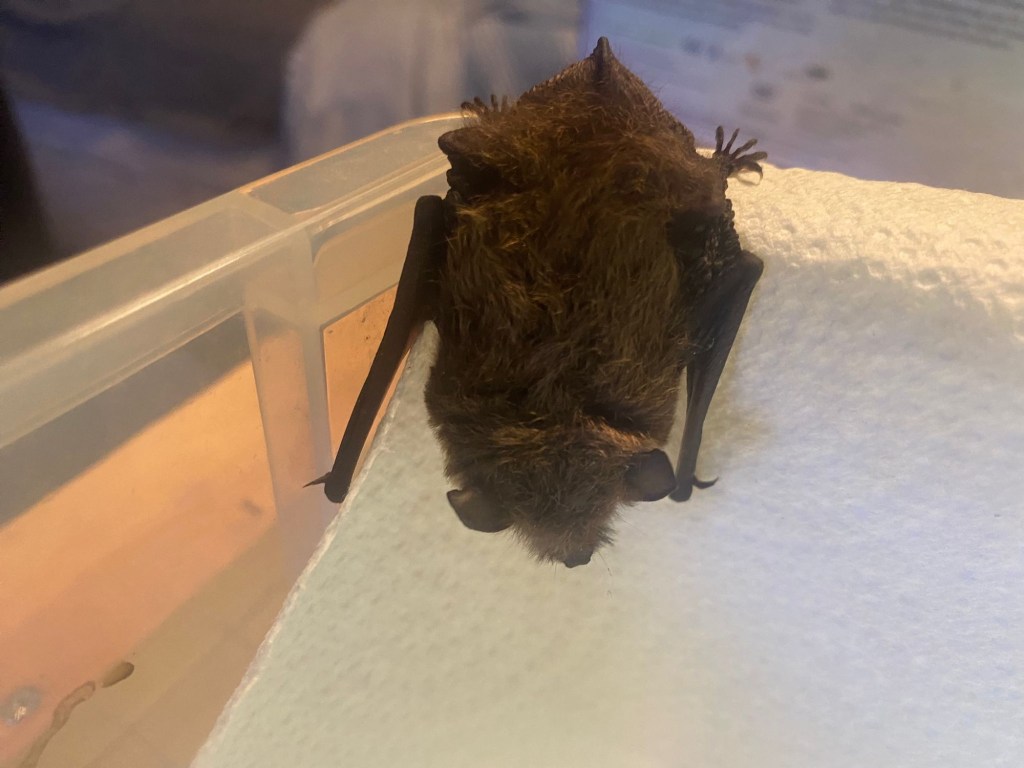
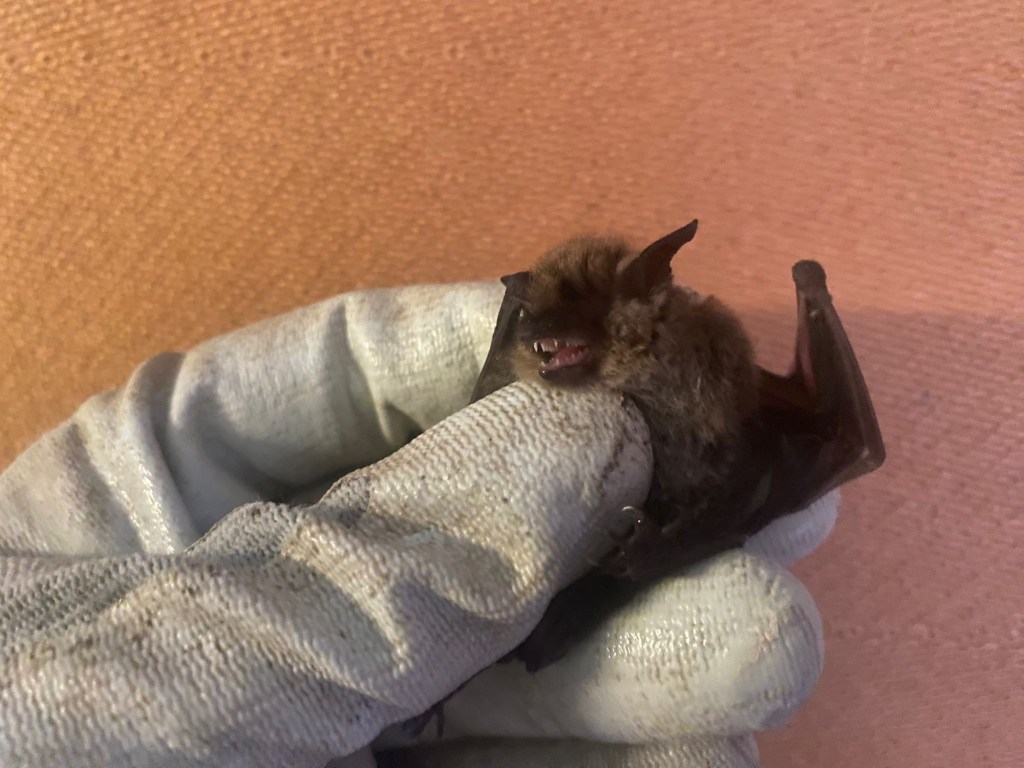
Before I go, I’d like you to indulge me while I tell you about something that I was involved in yesterday that’s nothing to do with ospreys. I was sitting at home and suddenly saw something clinging to an outside wall of my house. I went to have a look and discovered a bat. Luckily, we have a wildlife rehabber in the next village who is particularly knowledgeable about bats. He advised that it being out in the day meant it probably needed rescuing, so I got a ladder out and, wearing gloves (a sensible move when you look at its teeth in the second photo!) and handling it with a cloth, I managed to get it into a box and down to the rehabber. He told me that it was a whiskered bat, one of the rarest species in Scotland, and he will keep it to rehydrate it and get it back to a healthy weight, before releasing it back here. I was really pleased to do my little bit to help this tiny creature. Fingers crossed it makes a full recovery and can be released quickly.
Smile please (rehabber’s glove) (photos: courtesy G Wilson)
For those of you counting days, you will have noticed that there has been an ominous silence since chick #1 hatched overnight on 5/6 Jun and I’m sad to report that egg 2 did not hatch. It could have been infertile or could have been damaged at some stage; I doubt we’ll ever know but, the good news is that the chick from the third egg hatched this morning and was fully free of the egg shell at 0745.
First sight of the second chick just free of the shell
It didn’t take much part in the feeds earlier in the day but had successfully fed by noon. Augusta seemed at first to be a little nonplussed at the arrival of this second mouth and she kept looking over at it when she was feeding #1 wondering how it had got there. Samson was also very interested in it and, as in the last few days, made some effort (albeit unsuccessful) to feed the older one. He has also been allowed to brood for the first time since hatching started and was alone on the nest when the camera came on this morning at 0430.
Both chicks eager for some lunch
So it will be a 2 chick family and, although sad that the second egg did not hatch, I’m not unhappy that Augusta as a first time mum has only 2 chicks to rear. They both look strong and healthy and have a very experienced parent in Samson but there is little leeway for error in the life of a young osprey and we must hope that fortune favours them. In doing so, I would like to extend my condolences to my colleagues at Tweed Valley Osprey Project who sadly lost that incredible clutch which was incubated and would have been raised by the two females and possibly the absentee male. The combination of the male disappearing and the weather conditions making fishing so difficult was just too much for the family to survive. The margins are so small between success and failure. Fingers crossed our little family do well. The weather seems benign for the next few days, which is so important when they are so tiny and the fishing looks good. I will certainly keep you informed.
Augusta is a mum! Chick #1 hatched sometime overnight 5/6 Jun and was eager to have its first taste of fish.
Our first view of chick #1 at 0500 this morning
Not surprisingly, Augusta’s first attempts to feed it (at about 0900) were hesitant and unsuccessful and she solved the problem by stopping eating herself and sitting on the 2 remaining eggs plus the chick! However, Samson provided another grayling at 1100 and she managed to give the hungry chick a good feed; by the time a mid afternoon trout arrived, she was confident in her feeding technique and continued tearing off chunks of fish until #1 collapsed sideways in a food coma! She then demolished the rest of the trout herself.
Chick #1’s first ever taste of fish (Samson was so attentive during this first feed. It was charming to watch)
The second chick could well arrive tomorrow but the weather is due to be colder and wetter so it’s good that Samson is bringing in a steady supply of fish and Augusta has worked out how to feed a chick quickly and effectively. Hopefully, she will be able to feed however many mouths there are in dry spells between showers as it’s vital that they stay warm and dry to avoid losing body temperature – a real danger when they are this young.
We also had a persistent intruder this morning, a Scottish female who was inquisitive rather than aggressive but was most unwelcome all the same. I’ll give more details when I’ve worked out her ring number.
I’m never sure if readers want to know whether there’s no news or not, if that makes sense, so here is my report about what’s going on at the nest. it’s all very routine and quiet as incubation passes the half way stage.
A nice meal for 500 and a changeover of incubation duties
The standard day is that, shortly after the camera comes on at 0430, we usually see a shift change over as Samson comes in to relieve 500 (Augusta) who will have been incubating overnight. She usually disappears for about half an hour, for a wing and leg stretch and an opportunity to bathe, and there is then a period where the two of them swap and change over incubation duties and bring a few bits and pieces in just to add to the nest. He will often then disappear for a couple of hours before returning late morning. I expect he’s fishing but he doesn’t always return with a fish, so probably sometimes finds somewhere quiet to have his breakfast. If he does bring a fish back, she normally takes it, flies off to eat the first few bites and then returns to the nest perch to finish it off. He usually then does more of the incubating into the early afternoon while she spends a lot of the time sitting on the nest perch. He will go fishing again mid afternoon and usually brings back the largest fish of the day, after a couple of hours. He still has a tendency to be reluctant to hand this fish over, unless she is hungry and is quick off the mark, but if she is still full from the morning fish, she’ll let him have the major share. He’ll bring another fish in later on in the evening. We have been incredibly lucky with the weather so supplies have been good and both seem satisfied.
We haven’t had any osprey intruders since those reported in the last blog but that isn’t to say that we have had nothing left to look at. In fact, we’ve probably had the most activity of non-osprey wildlife during the last few weeks that I can remember.
On 11 May, for example, within a couple of hours we had a hare running directly towards us, being pursued by a fox, and then a close inspection of the nest by a red kite, still quite an uncommon sight around this area.
Curious red kite (Courtesy: K Ramsay)
I don’t think the hare was ever in any danger as it seemed only in 2nd gear whereas the fox seemed almost flat out but neither were aware of us until they got very close. The first we noticed were the 2 clouds of dust being kicked up as they ran along one of the tractor tracks in the field.
Hare and fox (Courtesy: K Ramsay)
In addition, there have been clouds of butterflies, mainly orange tips and peacocks, with one suicidal wall, which kept landing just where I was about to put my feet when I was walking along the river bank. The sand martins have been busy nesting in the sand cliff along the river and seem to have a much better supply of insects than last year. The highlight from the past couple of weeks was probably two views one of the brewery workers got of, first, some roe deer, close to the buildings and then, second, a very large dog otter, trotting along the bank.
Roe deer (Courtesy: J Finley)
Dog otter (Courtesy: J Finley)
We haven’t seen as much of the kingfishers as we normally do but there have been one or two sightings, so we know that they are around. The heron is ever present and we see and hear numerous other bird species as well.
So there’s lots going on to keep us entertained while we watch and wait for the next stage in the ospreys’ 2025 saga. My best stab of a pin in the calendar is for hatching to start around 6 Jun and I’ll keep you updated with any happenings before then.
As promised, I’m updating on the situation on the nest since the second egg was laid.
We had further intrusions by 565 on Sunday (4th) but, if she has been around since then, she certainly hasn’t come so close as to disturb the birds on the nest. An intruding bird when there are eggs or young chicks in the nest can cause disaster but it’s interesting, and a sign of her growing maturity, that Augusta tended to pancake rather than rear up when 565 attacked on Sunday, protecting the eggs from harm.
Augusta protecting the eggs rather than reacting to 565’s approach
The big news is that we now have a full set of eggs, after Augusta laid her third egg at about 1335 today. It took some while before she gave us any sort of look at them and it wasn’t until Samson came in with a fish that we got a clear view. Samson wasn’t sure that being given some time incubating was worth the exchange of a sizeable meal and so a bit of a tug of war ensued.
Fish tug of war
However, having lost that battle, he did take a long look at the eggs and took some time to bathe in the (mainly) reflective glory of 3 eggs having been produced.
Samson egg counting while Augusta disappears with the fish
Augusta must have been delighted to stretch her legs and wings and also to take shelter in some shade to eat her fish. It looked really hot up there as there was absolutely no wind and no shade from about midday. Samson was soon sitting with his beak open, looking longingly at where Augusta was sitting in the cool, enjoying her late lunch. There are definitely downsides to the job of incubating, despite it being a favourite pastime of his!